





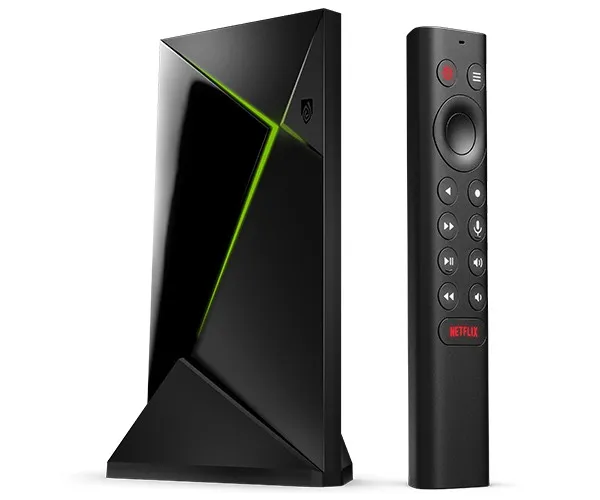
The Nvidia Shield TV base model has been unavailable across NVIDIA's major U.S. retail partners for months. NVIDIA broke its silence on the matter, and the answer left the central question unresolved. The company said the base model is "largely out of stock due to demand" and that it has "no updates to share regarding future availability at this time." If you're wondering why Nvidia Shield TV is out of stock, that's the official explanation. It doesn't tell you when, or whether, the device is coming back.
The Shield TV Pro remains available. Software support for all Shield devices continues. What NVIDIA has not provided is any restock timeline, production status, or confirmation that the base model has a future at all.
Nvidia Shield TV availability: what retailers show right now
The retail picture that emerged before NVIDIA's statement looked less like a supply shortage and more like a coordinated wind-down, as outlets noted l. By early July, the base Shield TV was unavailable across every retailer NVIDIA links to from its own site: Amazon, Best Buy, Newegg, Walmart, Micro Center, B&H Photo, and NEX. NVIDIA's own storefront had stopped offering the device entirely. B&H Photo labeled it "discontinued." Best Buy marked it "inactive" and stripped the listing details.
None of that affected the Shield TV Pro, which remained widely available at the same retailers without interruption. The stock problem was precise: one SKU gone, the other untouched. Broad supply disruptions typically hit an entire product family. A single model disappearing simultaneously from every channel, including the manufacturer's own store, is a different pattern.
Amazon hadn't consistently stocked the base model since early April. That's not a brief inventory gap. Three months without restocking, across seven retail partners and the maker's own website, is the kind of absence that tends to have a deliberate explanation behind it.
What NVIDIA said before, and why it doesn't quite fit
The company's "out of stock due to demand" framing is hard to square with what its own executive said about five months ago. Andrew Bell, NVIDIA's Senior VP of Hardware Engineering, told AFTVnews earlier this year that Shield demand had been essentially flat for a decade: "No matter how much we drop the price or how much we market or don't market it, the same number of people come out of the woodwork every week to buy Shield." He described production and software updates as ongoing, with no plans to stop either "any time soon."
That's specific, confident language about a stable and predictable market. A demand spike large enough to clear out every retailer simultaneously, for a product with reportedly steady and unchanging weekly sales, is not the natural follow-on to that description.
Two possibilities are left on the table. Either demand temporarily exceeded a final production run that NVIDIA hasn't yet decided to refill, or the "out of stock due to demand" framing is a softer way of describing something more final. What NVIDIA's statement doesn't include, and what would settle the ambiguity, is any mention of shipment timelines, production status, or planned inventory. The base model has been unavailable not for days or a couple of weeks, but for the better part of a quarter. That duration is what separates this from a routine supply blip.
There's also a broader industry factor worth noting. The tech industry has been contending with rising DRAM and NAND flash prices as manufacturers redirect memory supply toward AI servers and data centers, which Android Authority reported has made it harder to keep consumer electronics on shelves, particularly products built around older components. The base Shield TV runs a Tegra X1+ chip introduced in 2019. Whether memory costs are a contributing factor to its absence remains speculation, but it's a plausible piece of the picture.
A brief history of the Shield hardware line
Some context helps calibrate what's actually unusual here. The Shield platform launched in 2015 as a gaming-focused device. It was refreshed in 2017, then again in 2019, when NVIDIA adopted the faster, more power-efficient Tegra X1+ and added features including Dolby Vision and AI-enhanced upscaling. That 2019 refresh introduced two models: the tube-shaped base Shield TV at $149 and the updated Shield TV Pro at $199, keeping the traditional rectangular form factor.
Seven years with no hardware revision is a long run for a consumer electronics product. Bell acknowledged that tension in his earlier interviews, noting that NVIDIA was "always playing in the labs with new concepts for Shield" and that a new device could happen if the team found something compelling enough. He mentioned that a future model would likely prioritize AV1 decoding, HDR10+, and updated Dolby Vision support, features the 2019 hardware can't handle in silicon. No launch has been announced or hinted at with a timeline.
What to do if you're shopping for a Shield right now
The practical situation is clearer than NVIDIA's language suggests. The base Shield TV is unavailable, no restock has been promised, and buying one through third-party sellers carries the real risk that it never returns to first-party stock at its original price.
For buyers who want Shield-specific capabilities, specifically Android TV with GeForce NOW game streaming and, on the Pro, Plex Media Server support, GeForce Now game streaming, and a software support record now spanning over a decade, the Pro is the only option currently on shelves. At $199, it costs $50 more than the base model's last retail price, but the Pro was already the version most Shield buyers gravitated toward. It carries more RAM, twice the internal storage, two USB 3.0 ports, and support for external USB drives, and it holds significantly stronger customer reviews than the base model. The price gap was never that wide relative to what you get.
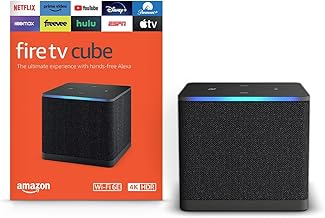
For buyers with more general needs, 4K streaming, mainstream app support, and a stable interface, the base Shield was already a tough sell before it went missing. The Google TV Streamer retails at $99 and the Onn 4K Pro at $59, both on newer hardware. A seven-year-old streaming box at $149 was a premium ask in that segment. The Shield's competitive advantage has always lived in its power-user feature set, not its price point.
For existing Shield owners, the picture is straightforward. NVIDIA's statement and Bell's earlier comments both point to the same thing: software support is continuing. CEO Jensen Huang reportedly told his team that NVIDIA could maintain Shield updates "for as long as we shall live," 9to5Google reported earlier this year. The device you already own keeps working. That commitment extends to the original 2015 hardware, which still receives updates more than a decade later.
What the current evidence actually supports
XDA observed last week that the Shield TV Pro is, in practice, now NVIDIA's only streaming product on the market, with the base model's disappearance potentially signaling a narrowing of the lineup from two tiers to one rather than an exit from the streaming market entirely. That framing is consistent with what the retail data shows.
NVIDIA has preserved the option to bring the base Shield TV back. The company has given buyers no concrete reason to expect that it will. Those are different positions in PR terms, but they produce the same outcome for anyone trying to purchase one at a normal retail price today.
The next useful signal will be concrete: a restock date, a formal discontinuation notice, or a successor announcement. Until one of those arrives, the Nvidia Shield TV base model should be treated as unavailable indefinitely. The Shield brand isn't dead. Whether it still has an entry-level price point is an open question NVIDIA has so far declined to answer.




Comments
Be the first, drop a comment!