



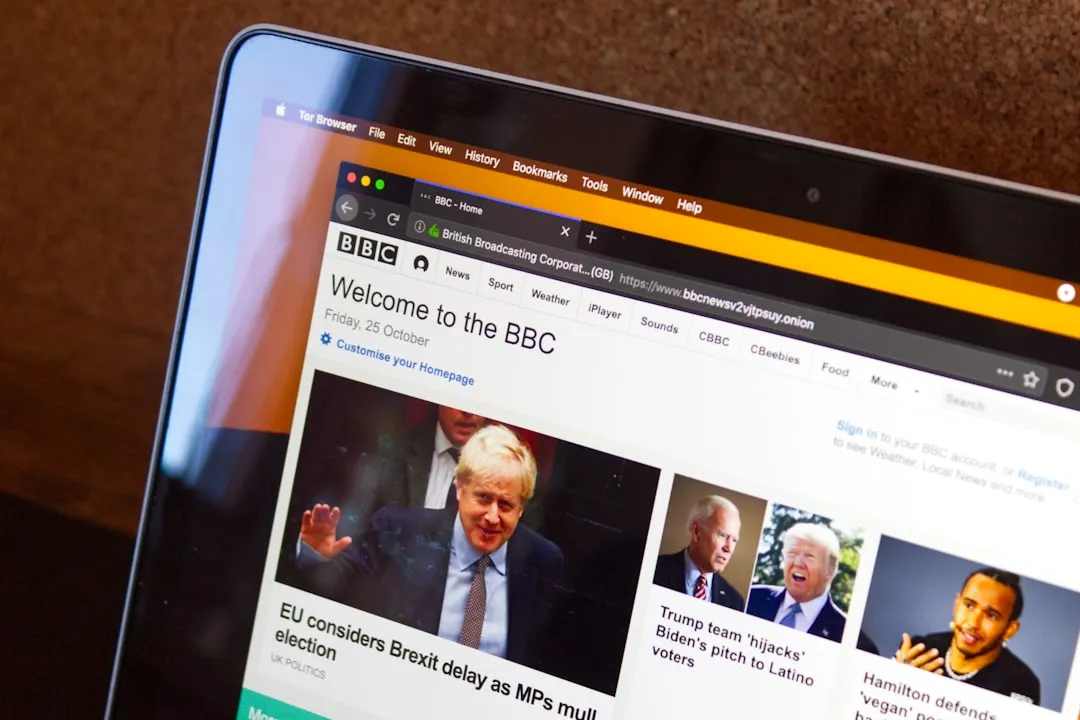
BBC Channel 4 Streaming Merger Explained: A Narrower Deal Than Reported
BBC director-general Matt Brittin confirmed this week that the corporation has held early talks with Channel 4 about a possible streaming partnership, with the most concrete idea being Channel 4 content distributed through BBC iPlayer while Channel 4 retains its ad-funded business model. The timing was pointed: Brittin's appearance before the House of Commons Culture, Media and Sport Committee came just two days after Sky announced a £1.6 billion acquisition of ITV, according to Hollywood Reporter. The BBC Channel 4 streaming merger framing that immediately circulated overstates what Brittin actually described. What he outlined is a content distribution arrangement, narrower and considerably more complicated than a unified platform.
Channel 4's CEO has not confirmed the same proposal. That gap matters more than anything Brittin said.
What the BBC Channel 4 streaming talks actually propose
The arrangement Brittin described is conceptually simple: a viewer opens iPlayer, finds Channel 4 programming, watches it alongside advertising that currently funds Channel 4. The BBC provides audience scale; Channel 4 provides content and keeps its revenue stream. "In the world of the ITV-Sky merger, Channel 4 looks very sub-scale. All of these mergers are driven by the need to have scale. One opportunity for them would be in partnership with the BBC, having content on iPlayer, but continuing to be ad-funded," TVBEurope reported him telling MPs.
The advertising problem is not a minor implementation detail. The BBC is prohibited from carrying advertising under its licence-fee charter, a condition tied to the more than $210 annual fee UK households pay, The Desk reported. How ad-supported Channel 4 content could operate inside a platform contractually required to be ad-free has no reported solution. Nobody involved has publicly claimed to have one.
A second complication runs underneath that one. Channel 4 was established to produce and distribute alternative programming serving as a counter to the BBC's more mainstream public-service output, The Desk noted. Juliane Althoff, a partner at media law firm Simkins LLP, identifies the full practical stack: programme rights clearances, renegotiated licensing arrangements, divergent governance structures, and separate regulatory obligations, all of which would need resolution before any formal distribution arrangement could take shape, Hollywood Reporter reported. Her framing cuts through the scale rhetoric: "For public service broadcasters, collaboration is less about beating the likes of Netflix and more about ensuring British content doesn't get lost in an increasingly crowded global marketplace."
Brittin acknowledged the difficulty directly. He described "an array of commercial, audience, public service, and technical issues" requiring resolution and said the broadcasters would explore the proposal "as quickly as we are able," Advanced Television reported. No timeline. No formal plan. Neither broadcaster has announced anything beyond exploratory discussions, The Desk confirmed.
Why the BBC is pushing now
Two pressures explain the BBC's urgency. Last month, the corporation announced it would cut $107 million from its content budget and eliminate 550 jobs, Hollywood Reporter reported. The legislative route that might have supplemented that budget closed a year ago, when a proposed streaming levy that would have directed foreign-streamer spending toward British production was rejected by the government, Hollywood Reporter reported. A distribution deal with Channel 4 would expand iPlayer's content catalogue without requiring additional spend.
The competitive pressure Brittin named is more specific than generic scale anxiety. British public-service broadcasters have faced sustained audience losses to Netflix, Prime Video, and Disney+, with that competition also hitting advertising revenue at Channel 4 and ITV, The Desk noted. Brittin's concern before MPs went beyond viewership numbers to discoverability: when global platforms control the default viewing environment, British content produced outside them becomes harder to find. "This is a moment of real jeopardy," he said, "because of the scale and because of the influence of a handful of U.S. and Chinese tech players which will dominate the creation and distribution of content," TVBEurope reported.
Channel 4's position, though, is not where Brittin's is. As recently as this past May, Channel 4 CEO Priya Dogra publicly dismissed merger thinking at the Creative Cities Convention. "I was in mergers and acquisitions for a long time," she said. "And the thing you learn is that there are no mergers. There are only acquisitions. Someone is always buying someone else and from my seat, that's the wrong answer for Channel 4, because it would just mean Channel 4 gets subsumed into another organization," Hollywood Reporter reported.
Whether Channel 4's thinking has shifted since Dogra's May remarks, possibly accelerated by the Sky-ITV news, is not established by the current reporting. Brittin confirmed an approach and a discussion. Channel 4 has not confirmed the same framing.
Three prior attempts, one consistent pattern
This is at least the third time a formal pooling of UK public-service streaming has been proposed. In 2007, the BBC, Channel 4, and ITV developed Project Kangaroo, a joint on-demand service planned to carry roughly 10,000 hours of combined archive content. Regulators shut it down before launch on competition grounds, Engadget reported.
The second attempt produced a different failure mode. BritBox launched in 2017 as a BBC-ITV joint venture and wasn't blocked by regulators. It ran until ITV's commercial interests diverged from the shared project; ITV pulled its content in 2024 to consolidate under its own ITVX brand, Engadget reported. That precedent is more instructive than Kangaroo for the current situation. The risk isn't necessarily a regulator stepping in; BritBox's collapse suggests the more durable problem is structural misalignment between publicly owned broadcasters with separate commercial mandates that pull apart over time.
In 2024, BBC-Channel 4 merger conversations surfaced and then stopped, both broadcasters confirming the discussions would not proceed, TVBEurope reported. Ambition meets structural complexity, and structural complexity wins. That's been the pattern across all three attempts.
What would signal these talks are going somewhere real
The single clearest indicator that something concrete is developing would be a public statement from Channel 4's leadership specifically endorsing the iPlayer distribution model. Not vague collaboration language. That specific arrangement, on the record, from Channel 4's side of the table.
Dogra's May comments and Brittin's July testimony are pointing in different directions. Until Channel 4 publicly confirms the same proposal Brittin described, these talks remain one broadcaster's initiative. Whether the Sky-ITV deal changed Channel 4's calculus since May is the question the current reporting leaves open, and it's the only one that determines whether this round ends differently than the last three.




Comments
Be the first, drop a comment!