



Netflix vs YouTube Short-Form Video: Why Publisher Clips Aren't Enough
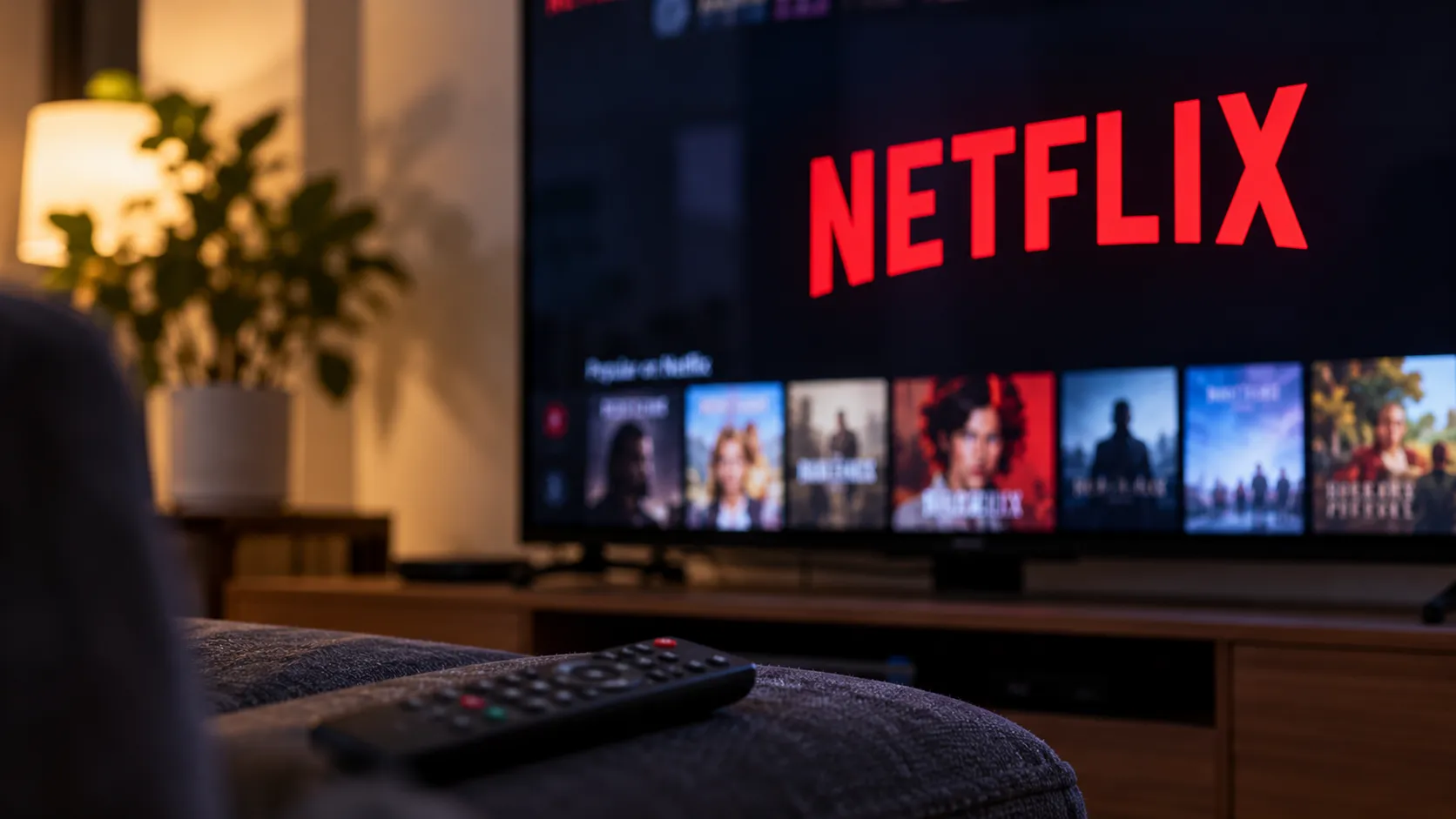
Netflix's decision to license short-form clips from Condé Nast, Hearst, and BuzzFeed Studios is one of the clearest strategic tells the company has offered in years. Not because the content matters three-to-twenty-minute clips from Bon Appétit and Cosmopolitan are table stakes, not programming strategy but because of who Netflix chose not to sign. The deals are with publishers, not creators. In the Netflix vs YouTube short-form video battle shaping up this year, that distinction is the whole story.
Business Insider reported this month that starting in August, Netflix subscribers will find licensed short clips inside the app, explicitly framed as a bid to reclaim viewing time migrating to YouTube. The time migration is real. Nielsen designated YouTube the top U.S. streaming platform by total watch time for twelve consecutive months, and separately, viewers worldwide were streaming more than one billion hours of YouTube content on television screens every day as of early 2024. Netflix is responding to a problem that has been compounding for years.
The argument here is specific: Netflix can replicate YouTube's format in weeks and its content library in months. It cannot replicate YouTube's creator ecosystem in any practical timeframe, because that ecosystem isn't a content catalog. It's a compounding system of audience habit, advertiser infrastructure, and commercial trust built over nearly two decades. Publisher clips address the surface of that problem while leaving its structure untouched.
Netflix short-form video strategy vs YouTube's creator flywheel
The operational logic of Netflix's publisher strategy is not hard to follow. Licensing video from Condé Nast involves a content agreement, a recognizable brand, and predictable outcomes. Signing individual creators involves revenue-sharing structures, exclusivity negotiations, and the unresolved question of whether a creator's audience actually follows them to a new platform or stays native to YouTube. Publisher deals are comparatively fast to execute; creator ecosystems are slower because they require incentives, tooling, and the kind of repeat behavior that takes years to establish.
What's fast to acquire is also easy to replicate and impossible to make sticky. A Cosmopolitan clip inside Netflix is functionally identical to the same clip on YouTube, Instagram, or Cosmopolitan's own site. There is no loyalty to the container. Netflix hasn't built a reason for someone to return tomorrow for the next installment, because the publisher doesn't publish for Netflix. It publishes everywhere.
The contrast with YouTube's structure is sharp. YouTube's own NewFront data from earlier this year found that 83% of Gen Z viewers prefer watching individual creators over studio-produced programming, and 79% say YouTube creator communities give them a sense of belonging. Those figures come from YouTube and deserve some skepticism as precise measurements. But the underlying behavioral pattern they describe audience loyalty organized around specific people rather than specific platforms is consistent with what the broader streaming industry has documented about churn and retention. People cancel Netflix when they finish a show. The same logic doesn't apply to YouTube, where there's always another video from someone a viewer already follows, already trusts, already came back for last week.
Netflix's publisher strategy produces content. It does not produce that relationship. The ceiling on a publisher clip strategy is a marginally more useful app. The ceiling on a creator ecosystem is a platform people open out of habit.
The compounding system Netflix is actually up against
YouTube's TV position is the clearest evidence of how durable that ecosystem has become, and it's the part of this story best supported by independent data.
Nielsen's watch-time ranking establishes something YouTube's own metrics can't: YouTube beat every other streaming service for a full year by the most important measure in television. YouTube's own narrative centers on creators as the engine of that lead, and its product rollouts have been built entirely around them. The number of YouTube channels earning six figures or more annually from TV screens specifically grew more than 45% in a single year, per YouTube's October 2025 figures. Creators are now optimizing for the living room because that's where the money is, and YouTube has responded with product investments that make creator content look and behave like premium television: 4K thumbnail support, bingeable "Shows" collections, channel-specific search on connected TVs, and improved living-room discovery.
The scale of the catalog underneath that TV presence matters as much as the viewing experience. YouTube's Partner Program includes more than three million creators, per its own NewFront figures from earlier this year. More telling is how that catalog performs over time: YouTube says 40% of a video's views happen more than a month after it goes live. That's a library model, not a feed content that compounds in value as more people discover it, search for it, and share it. Licensed publisher clips are less likely to create repeat platform-specific viewing habits when the same content is distributed across every channel simultaneously.
The commerce layer reinforces why this system is hard to dislodge once it's in place. YouTube has assembled a full-funnel monetization system across its 2025 and 2026 product rollouts: AI-powered creator matching, affiliate link amplification, Google Pay purchases completed in two clicks on connected TVs, and timed product placements within videos. Google's own internal data claims that viewers who watch a creator discuss a brand are thirteen times more likely to search for it and five times more likely to buy figures from a sample of 60 campaigns over one month in early 2026, which should be treated as directional rather than definitive. Even discounting for self-reporting, the structural point holds: YouTube has turned the television screen into a discovery and commerce surface that makes money when creators make money.
What ties these advantages together TV penetration, catalog depth, commerce infrastructure is that each one reinforces the others. More creators earning TV revenue means more investment in TV-quality production, which attracts more viewers, which attracts more advertisers, which funds more creators. Netflix entering short-form video with publisher clips steps into the output of that flywheel without disrupting any part of the input.
What Netflix would actually have to change
The publisher strategy is a product decision, but the gap Netflix is trying to close is a product architecture problem. To compete for ambient, habitual viewing, Netflix would need to change how the app works at a fairly fundamental level and some of those changes sit in direct tension with how the business currently operates.
Start with recommendation behavior. Netflix's algorithm is optimized for session depth on long-form content: it learns what genres you like and surfaces the next show. That logic works well for appointment viewing. It works poorly for the low-intent, open-ended browsing that characterizes how people use YouTube where the goal isn't to finish something, but to find something worth ten more minutes of attention. A short-form feed requires a different recommendation model, one that rewards return visits at short intervals rather than extended single sessions.
Then there's creator identity. YouTube's app is built around channels: subscribers get notified, can browse a creator's full archive, and can search within a specific channel on a TV screen. Netflix has none of that infrastructure. There are no follow mechanics, no creator profile pages, no way to build the serial discovery loop that makes someone return specifically for the next upload from a person they like. Without that, even genuinely good short content becomes undifferentiated scroll.
The monetization conflict is the hardest part. Netflix's subscription model is built on the premise that ad-free, curator-selected content justifies a monthly fee. Introducing creator revenue-sharing complicates that economics in two directions: it requires Netflix to take on the cost and complexity of a creator payout system, and it raises the question of what creators get in return. On YouTube, the answer is reach, search discoverability, and a monetization stack that pays out at scale. Netflix can offer reach to its subscriber base, but it cannot currently offer search discoverability for short content or a commerce layer that lets creators earn from their audience's purchasing behavior. Without economic incentive that matches or exceeds what YouTube offers, signed creators will treat Netflix as a secondary distribution window a place to syndicate, not to build.
What "structurally competitive" would actually look like in measurable terms: more daily session starts, lower churn among viewers under 35, meaningful ad inventory on a short-form surface, and creator retention beyond initial contract windows. None of those metrics are currently reported by Netflix, which is itself telling.
What success would require and what to watch
For Netflix's short-form strategy to close the structural gap rather than just fill a content hole, it would need to move on three fronts, roughly in this order of importance.
First, individual creator partnerships rather than publisher licenses. YouTube's own survey data found that 76% of U.S. viewers cite access to both short and long-form content as a primary reason YouTube is their go-to platform, per an Ipsos survey cited by YouTube earlier this year. The key word is "access" meaning specific creators they follow, not a rotating selection of branded clips. Without creators who post regularly to Netflix specifically, the app has no compounding reason for daily return.
Second, search and discovery infrastructure for short content. The actions that matter are simple but currently absent from Netflix: follow a creator, get notified about their next upload, search their archive by topic, move from a short clip to a longer piece by the same person. Without that chain, short content on Netflix is a feed users scroll through once and forget.
Third, a monetization layer that gives creators genuine economic incentive to prioritize Netflix over YouTube. The most likely mechanisms would be some combination of revenue share on ad-supported views, performance-based bonuses tied to session starts, and branded content tools that let creators bring sponsor relationships onto the platform. Without at least one of those, exclusivity deals will be expensive and fragile.
The honest version of this analysis acknowledges what Netflix has that YouTube doesn't: a global subscriber base conditioned to associate the platform with premium television, a content budget that funds programming YouTube can't commission, and a subscription model that doesn't require viewers to tolerate ads. Those are real advantages in the long-form, appointment-viewing segment. The question is whether they transfer to ambient, habitual, everyday viewing and the evidence so far suggests they don't transfer automatically. Premium brand association doesn't make someone open an app every morning.
The August rollout answers one question clearly: Netflix has concluded that ignoring everyday viewing is no longer tenable. Whether publisher clips are a genuine first step toward a creator strategy, or a format imitation that leaves the underlying system untouched that answer will come from what Netflix does in the months after launch, not from the launch itself. The clearest signal to watch for is creator exclusives with a follow mechanic attached. If Netflix is still licensing exclusively from publishers by early 2027, with no subscribe button and no creator monetization terms announced, the gap will be wider, not narrower.


Comments
Be the first, drop a comment!