





Netflix Overtakes BBC in UK Viewing: The Broadcast Default Is Gone
Netflix nudging ahead as UK viewers' starting point is a narrow finding with a broad implication: the broadcast default is gone.
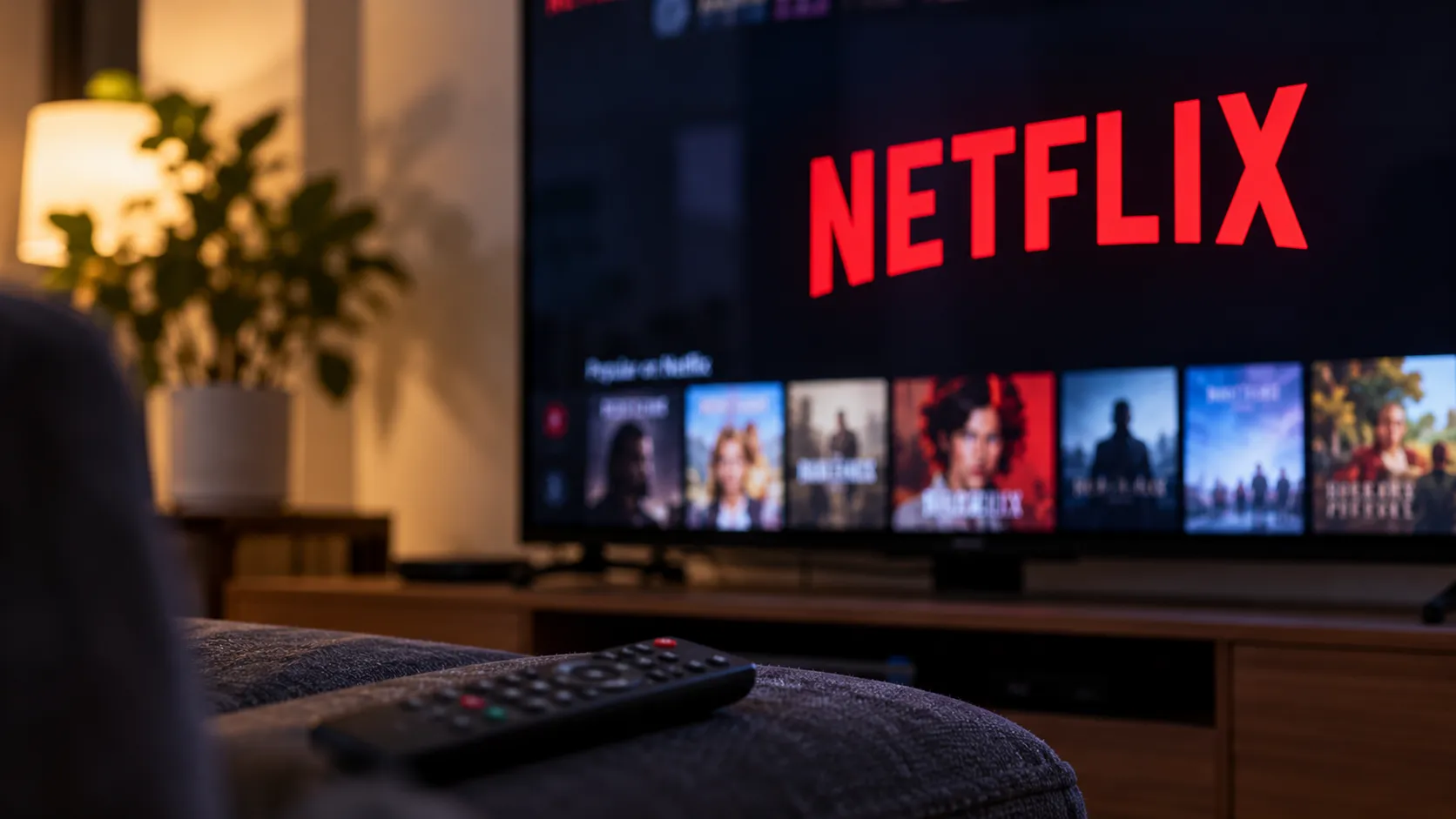
For the first time, a streaming service has overtaken the BBC as the place UK viewers say they turn to first when deciding what to watch. Ofcom's annual Media Nations report, published this week, found 26% of UK viewers name Netflix as their first choice, one percentage point ahead of the BBC at 25%, with ITV at 15% and YouTube at 10%.
One point is not a rout. And the methodology caveat that Ofcom itself attached to that figure deserves to be addressed up front, not buried. Once it is, something more durable than a headline number becomes visible: the broadcast default, the century-old assumption that turning on a television in Britain means turning to a channel, is gone. The Ofcom data shows when that change registered, who is driving it, and what it means for every organisation that depends on British audiences.
What the Ofcom Media Nations report says about Netflix vs BBC
Start with what "first choice" actually measures. It is a specific, narrow question: which service do you reach for when you want to watch something? That is a measure of habit and instinct, not time spent or satisfaction with what you find. The distinction matters more than it might seem.
The BBC still accounts for 18% of all UK video viewing. Netflix accounts for 9%. The Independent's reading of the Ofcom data shows British audiences spend roughly twice as long with the BBC overall. Owning the first click is not the same as owning the evening.
On content, the picture is similarly mixed, and the two sources that cover this differ in ways worth flagging. The Independent reports the BBC has placed eight programmes in the top ten most-watched titles so far in 2025, while Deadline's reading of the same Ofcom report puts BBC and Netflix level at four titles each in the full-year top ten. The two figures are not directly comparable: one covers the year to date, the other the full year. Together they suggest neither organisation dominates the content rankings outright. What is clear is that Netflix produced the two biggest individual programmes of 2025. K-Pop Demon Hunters drew 24.4 million viewers; Adolescence peaked at 16 million. The BBC's Celebrity Traitors drew 14.8 million, per Deadline.
Brand perception adds a third dimension. More UK adults associate Netflix than the BBC with "high quality content," "content that is relevant to me," and "creative content," per Ofcom research summarised by Deadline. The BBC scores higher on "content that offers a different point of view from my own." And 66% of adults still associate the BBC with British drama, against 24% for Netflix a remarkable figure for an American company operating in this market, and one that suggests Netflix has built genuine cultural legitimacy here, not just subscriber numbers.
Now the caveat. The prior year's figures put the BBC at 28% first choice and Netflix at 23%. An Ofcom spokesperson confirmed methodology changes make that comparison "indicative only," not a clean like-for-like year-on-year measure. That is a real limitation. It means the apparent three-point swing to Netflix cannot be treated as a documented trend. What can be said is that the current year's figure, taken on its own terms, shows Netflix ahead. And "first choice" is a meaningful metric precisely because it captures the moment of decision, which is increasingly where platform competition is won or lost. The headline is accurate; it just needs to be held alongside what the data cannot yet prove.
Who is driving the shift, and what the age gap reveals
The aggregate 26-25 split conceals a divide that is anything but close. Among 16-24-year-olds, 36% choose Netflix first against just 14% for the BBC. Among over-75s, the ratio inverts sharply: 48% reach for the BBC first, while only 5% choose Netflix, per Deadline's breakdown of Ofcom's age data. The national average of 26-25 is essentially what you get when you average those two extremes across a full population.
The critical point is that declining broadcast viewing is not confined to the young. Traditional TV reach fell across every age group: roughly 70% of Britons watched broadcast television for at least 15 minutes a week in 2025, down from 73% the year before and 78% in 2022, as The Next Web reported. The Independent confirmed that declines were seen across all age groups, including viewers aged 75 and over. A gentle but unmistakable slide.
Older audiences are not simply staying put, either. Streaming hours among over-75s rose 56% to 36 hours per person per year, while 55-74-year-olds increased their streaming by 28% to 85 hours per person per year, per Deadline. The BBC's oldest stronghold is moving, just more slowly. Its lead with older viewers is demographically concentrated and, by the streaming-hours evidence, already softening at the edges.
YouTube complicates any simple Netflix-versus-BBC framing, and in doing so sharpens the real argument. YouTube at 10% first choice is not a distant footnote. YouTube's weekly reach among over-75s rose from 28% in 2022 to 33% in 2025, and time spent watching YouTube on television sets doubled to 19 minutes per person per day, up from nine minutes three years earlier, per The Next Web. This is a platform that produces almost none of its own content, yet it sits fourth in the first-choice rankings and is growing its foothold among pensioners. The shift toward platform-first behaviour is not a Netflix story. It is a structural story that Netflix happens to be winning.
The more fundamental question, then, is not whether younger viewers prefer Netflix now they clearly do but whether the habit of opening an app rather than turning to a channel becomes permanent regardless of age. The YouTube numbers suggest that process is already well advanced.
What the broadcast default actually was, and why losing it matters
The broadcast default was not just a preference. It was infrastructure.
For most of British television's history, the decision of what to watch began with a channel BBC, ITV, Channel 4 because those were the only options the technology offered. Ofcom put it plainly this week: "the aerial on the roof has been replaced by the router in the hallway." The nation's viewing now depends on broadband, and broadband delivers apps, not channels.
The connected-TV interface matters here more than the headline figure suggests. Netflix being someone's "first choice" is partly a content judgment and partly a product-design outcome. Streaming apps are increasingly the default opening screen on smart televisions, and the psychology of the first screen shapes what gets watched before a viewer has formed any conscious intention. The "first click" metric captures exactly that moment: which app does the viewer open before content quality is even relevant? The fact that Netflix wins that question, even narrowly, reflects platform position as much as programming quality. It is worth being clear that this reading of the interface dynamic is an inference from what the "first choice" measure implies Ofcom's report measures the outcome, not the mechanism but it is the most plausible explanation for why a service with half the BBC's total viewing share leads on first choice.
Broadcasters are not passive in this. The streaming apps of the UK's public and commercial broadcasters iPlayer, ITVX, Channel 4 Streaming, and 5 grew viewing by 9% year on year, as audiences who stopped watching scheduled television followed programmes onto on-demand, per The Next Web. That is genuine growth. But growing an app audience where viewers arrive with a specific programme in mind is structurally different from commanding the opening screen where viewing decisions are made. The "first choice" metric captures the latter. The broadcaster streaming apps, based on what the data shows, are capturing the former destination viewing, where the viewer already knows what they want. The gap between those two modes of engagement is where the broadcast default was most valuable, and where its absence is now most consequential.
The BBC losing the first click is not primarily a story about content failure. Eight of the year's top ten programmes, or four in a different reading of the same data, still carry BBC origination. It is a story about platform architecture: about who controls the interface where undecided viewers begin.
What changes now, and for whom
For the BBC, the Ofcom data presents a specific challenge. It still wins on total viewing time, with 18% of all UK video viewing against Netflix's 9%, per The Independent. But total viewing time is a trailing indicator. The "first choice" figure measures the decision point that comes before it and losing that to a commercial platform, even by one point, signals that the BBC's cultural centrality can no longer be assumed from the infrastructure it once controlled. The aerial that guaranteed it a default audience has been in the hallway for a decade. The router that replaced it does not.
For commercial broadcasters, the picture is more pressured still. ITV at 15% first choice sits behind both Netflix and the BBC, and the 9% year-on-year growth in broadcaster streaming apps, while real, has to be weighed against the scale of the platform competition. The shift to on-demand works for broadcast brands with strong content. It does not compensate for the loss of the scheduled appointment, which was the mechanism by which broadcast television held audiences who had not actively decided to watch anything.
The financial picture for the streaming sector deserves a careful reading too. UK streamer revenues rose 18% to £5.2 billion, but Ofcom attributed that growth explicitly to subscription price increases rather than subscriber additions. During the same period, the proportion of advertising-tier subscribers to services including Netflix and Disney+ rose rapidly, Ofcom noted. Services such as Netflix, Disney+, and Amazon Prime Video now reach roughly 70% of British homes, a figure that has largely stopped climbing. A market growing revenue through price rather than scale is a mature market. Netflix's lead in first-choice preference gives it a strong position in that mature market, but it is not the same as the structural dominance the BBC once held simply by virtue of being what British television was.
The Ofcom finding is best understood as a confirmation, not a discovery. The broadcast default had been weakening for years, visible in the slow decline of scheduled viewing, the growth of on-demand, the generational divergence in habits. The 2025 data is the first time a single number has formally registered its end. The methodology caveat limits how precisely that moment can be dated. It does not change what the direction of travel has been, or where it is going. That is what makes a one-point margin worth taking seriously.



Comments
Be the first, drop a comment!