





Vurt Vertical Video Streaming App: What to Check First
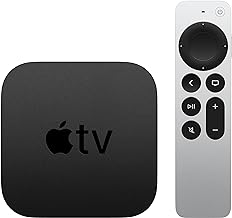
Vurt, a vertical video streaming app built around short, serialized microdramas, recently launched dedicated apps for Apple TV and Android TV, bringing its phone-shaped 9:16 video to a wide-screen TV (The Verge, 2 days ago). The company says the apps unlock a catalog of 3,500 episodes across more than 100 shows, and that its user base has grown from 10,000 people at its March launch to 675,000, though those figures come from Vurt itself rather than independent tracking (The Verge, 2 days ago).
Vurt cofounder Hilmon Sorey told The Verge the push into dedicated TV software came from direct user feedback: people wanted to watch, on bigger screens, the vertical shows they were already watching on their phones (The Verge, 2 days ago). What's confirmed stops close to there. The Verge's reporting doesn't say which Apple TV or Android/Google TV device models the apps support, whether sign-in is required, whether "free-to-finish" involves ads, or whether watch progress carries over between phone and TV. That gap between the pitch and what's actually verifiable is worth keeping in mind before treating this as a plug-and-play upgrade.
How the Vurt Apple TV app and Vurt Android TV app change viewing
Vurt previously offered a way to cast phone content to smart TVs. Sorey described that as a first step, not the end goal: "At first, we first developed the ability for folks to cast to smart TVs," he said, before the company decided a native app made more sense (The Verge, 2 days ago). Sorey says the dedicated apps can use the hardware built into large-screen devices to deliver HD/4K video and higher-quality audio, something casting doesn't take full advantage of (The Verge, 2 days ago). That's Sorey's explanation for the upgrade, not an independently measured comparison of picture quality between the two.
Vurt says the library behind both apps comes from licensing deals it signs with production studios and individual creators, split 50/50 on revenue (The Verge, 2 days ago). Independent creators can also submit projects directly, and Vurt says an approved series can go live on the platform within a matter of days (The Verge, 2 days ago). Sorey ties that turnaround and the revenue split to a broader philosophy about treating creators fairly, something he also connects to how the app charges viewers.
Vurt relies on what Sorey calls a "free-to-finish" model, which he positions as an alternative to the coin or credit systems he criticizes as common on other microdrama platforms (The Verge, 2 days ago). He's blunt about why he sees that gamified-currency approach as a problem: "If you are a platform that's doing your own original content and you don't have creators to pay, then 'give us $20 and we'll give you 500 coffee beans' kind of gamification is intentional," he told The Verge, adding that it's "a ruse that they can use to boggle your mind because they control that entire content ecosystem" (The Verge, 2 days ago). That's a pointed critique of rivals, and it reflects Vurt's intended positioning as the more user-friendly option, not an independently verified outcome. Whether "free-to-finish" means genuinely no cost on the TV apps, or whether ads fill that gap, isn't addressed in the available reporting.
What's confirmed and what's still a Vurt claim
Strip away the framing, and the only facts here that don't trace back to Vurt's own account are that the Apple TV and Android TV apps exist and that The Verge interviewed Sorey about them. The catalog size, the licensing structure, the 50/50 split, the jump from 10,000 to 675,000 users, and any gains in TV engagement time are all claims Vurt makes about itself, surfaced in a single interview with one company executive rather than independent measurement (The Verge, 2 days ago).
Take the claim that vertical video holds up on a TV screen. Vurt consulted creators ahead of launch, and according to Sorey, they insisted microdramas feel just as engaging on a TV as on a phone with earbuds in (The Verge, 2 days ago). "You can have a different kind of immersive experience, even on a wide screen in vertical format, because verticals tell their stories in a very different way," Sorey said (The Verge, 2 days ago). That's a real perspective from creators Vurt says it consulted, but it isn't a usability study, and how many creators were asked or how they were chosen isn't specified. Sorey separately says Vurt has seen overall engagement time increase among TV-app viewers, though no methodology for that measurement has been published (The Verge, 2 days ago).
Sorey's larger argument is that microdramas aren't failed TV or failed film, they're their own genre, built on narrative mechanics rather than screen size: "You've got to have your hook to begin and at the tail end of that, you've got to thrust them into the next episode by virtue of a cliffhanger" (The Verge, 2 days ago). He points to the format's familiar fingerprints, formulaic plots, uneven acting, and very short episodes, as deliberate choices that define the genre rather than shortcomings (The Verge, 2 days ago). It's a coherent pitch. It's also the pitch of someone whose company just spent resources building TV apps and needs that bet to look smart.
What the Vurt TV apps still don't explain
The Verge's interview with Sorey doesn't walk through how the interface handles a portrait-shaped video filling a landscape TV screen. There's no detail on whether episodes play letterboxed with bars on the sides, how remote navigation handles a catalog built around vertical thumbnails, or how discovery and recommendations work on a 10-foot interface instead of a touchscreen.
Several other basics also go unaddressed in the available coverage:
- Which specific Apple TV and Android TV or Google TV device models and software versions support the apps
- Which regions the apps are available in
- Whether a Vurt account syncs across phone and TV, including whether playback progress carries over
- Whether "free-to-finish" includes ads on the TV apps, and how often
- Whether casting remains available alongside the native apps
None of this is necessarily a flaw in Vurt's product. It's a gap in what's been reported. The app-store listings for the Apple TV app and Android TV app may clarify some of these points directly, but checking them firsthand is the only way to know before assuming the TV experience matches the pitch.
The case against: microdramas were built for the phone, not the TV
Set the TV launch next to how the industry usually talks about this format, and the pitch gets harder to square. Several industry executives cited in recent coverage describe the genre as something engineered specifically for mobile habits, not adapted to them. One creator put it plainly: episodes are "filmed in a vertical format and edited for the way people actually watch today," a fast-paced structure built around plot twists and cliffhangers (Media Play News, earlier this year).
Another industry figure went further, framing vertical video as a format defined by its freedom from friction specifically because it's shot for a phone screen: "It's shot full-screen, in a vertical format, so there's no friction for the viewer... You can watch a full story in small bursts throughout the day. It fits how people already use their phones" (Media Play News, earlier this year). That's an argument about convenience as much as storytelling, the idea that microdramas succeed because they fill dead time on a device people are already holding.
Hernan Lopez, founder of Owl & Co. and Wondery, puts a similar point even more bluntly: "Vertical is the natural way to hold your phone" (Vanity Fair, four months ago). Creator Hannah Stocking describes the format's defining constraint as working in seconds, not minutes: "We only had six seconds to showcase character relationships, tell a joke, have a hook," calling the result "an entirely new language of storytelling" (Vanity Fair, four months ago). Instagram's own moves point the same direction. The platform expanded its TV app in June to include Reels, disappearing Stories, and horizontally oriented video, a shift The Verge characterizes as an attempt to keep pace with YouTube rather than evidence that vertical content performs especially well on TV (The Verge, 2 days ago).
None of this proves Vurt's TV apps will fail. It does mean Vurt's bet only pays off if the genre's appeal lives in its narrative shorthand, the hooks, cliffhangers, and bite-sized episodes, rather than in the handheld, low-friction viewing that several industry figures cited above attribute to the format's rise. The current evidence doesn't settle which explanation is correct. It only shows which one Vurt is betting on.
The market Vurt is competing in
Vurt isn't launching into empty space. Owl & Co. counts nearly 2,000 apps worldwide fielding vertical content and competing for viewer attention, a crowded field that may explain why a TV-native app could help a smaller platform stand out (Variety, 2 months ago). Crowding doesn't mean the sector is thriving evenly, though. In the second quarter of 2026, new-series launches across vertical platforms rose 25% while total watch time for those new series fell 4%, a gap suggesting more content isn't buying proportional attention (Variety, 2 months ago).
The broader numbers around "vertical media" are easy to mistake for a microdrama-app story when they mostly describe something else. Owl & Co. projects the global vertical-media sector will generate roughly $150 billion in revenue in 2026, with about $131 billion of that coming from advertising across platforms including TikTok, Instagram, YouTube, and Facebook, and Meta, ByteDance, and YouTube together account for 94% of the total (Variety, 2 months ago). Lopez separately estimates that Meta's Reels alone will bring in more than 40% of that $150 billion, more than Netflix's annual revenue, and that at least three vertical-native companies have individually crossed a billion dollars in yearly revenue, though he doesn't name them (Vanity Fair, four months ago).
That gap between sector-wide size and any single app's reach is part of why PocketFM CEO Rohan Nayak, writing in a personal opinion piece that reflects his own stake in the category, argues the next phase of competition won't be won with marketing budgets. "The next generation of microdrama won't be won by the company with the biggest marketing budget. It will be won by the company that finally solves retention," he wrote, pointing to deeper catalogs and genuine content differentiation as the real battleground (Storyboard18, four months ago). His framing offers a relevant comparison to Vurt's own positioning: a free-to-finish model instead of coin purchases, and a TV expansion that Vurt says has increased engagement time. Whether that bet pays off in retention the way Nayak describes is a separate question from whether it pays off in downloads, and nothing in the current reporting answers it either way.
What to check before trying Vurt on a TV
Anyone already using Vurt should search the Apple TV App Store or the Google Play Store on an Android TV or Google TV device directly, rather than relying on casting out of habit. Compare the native app's picture quality and remote navigation against the old casting workflow, and check whether the TV app asks for a separate sign-in, whether ads show up during playback, and whether progress on a show actually picks up where the phone left off.
Anyone who isn't already a Vurt user should treat the TV launch, and the growth figures behind it, as a pitch rather than proof. The strongest argument against the whole premise, that microdramas are built around phone-first convenience rather than cinematic composition, hasn't been resolved by this launch, and Vurt's own numbers don't settle it either. Independent app reviews and hands-on testing from outlets not relying on a single company interview are worth waiting for before judging whether the TV experience lives up to the claim.


Comments
Be the first, drop a comment!