



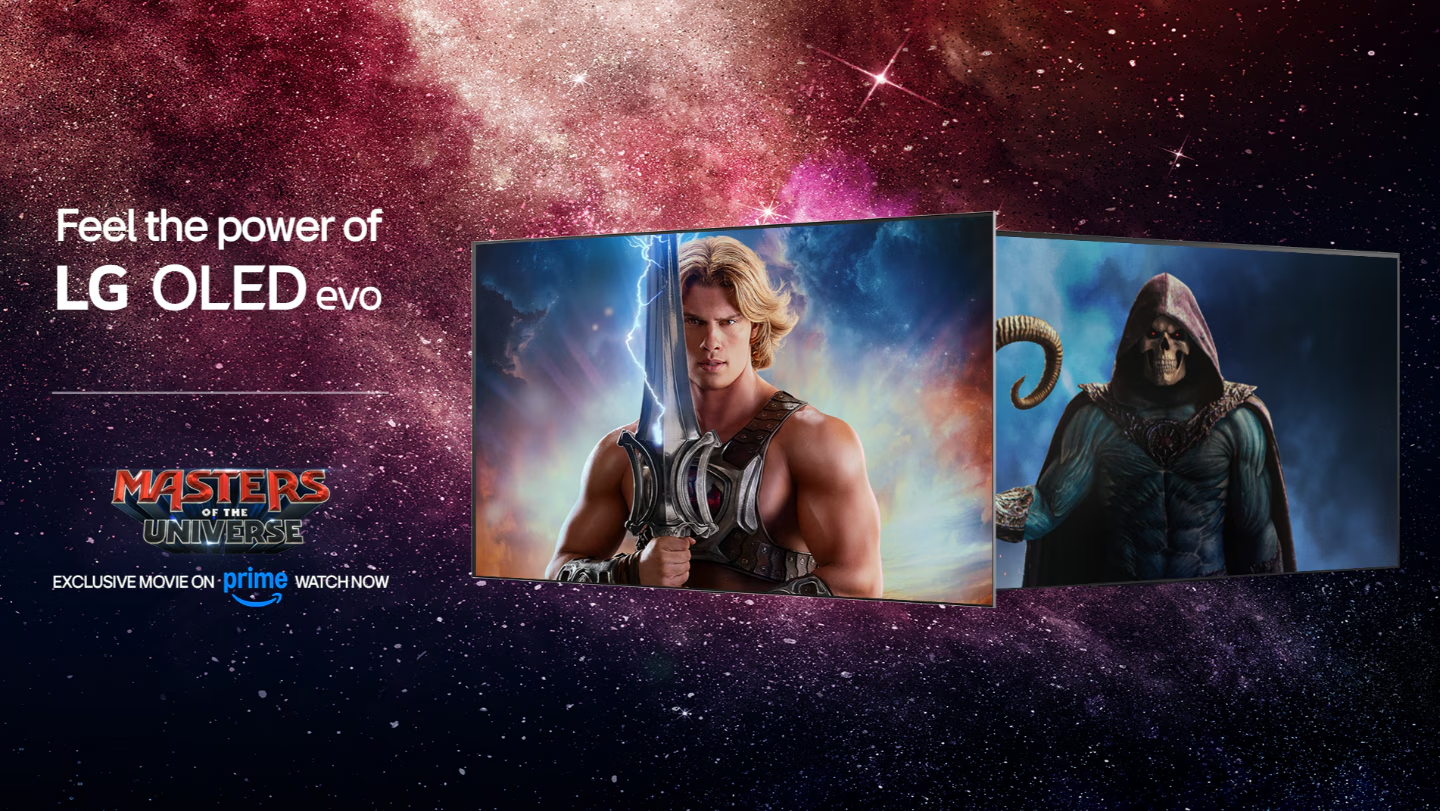
LG introduced a picture setting that lets movie studios influence how individual streaming titles appear on compatible televisions. Creator Original Picture Mode can apply title-specific parameters for shadow detail, color balance, noise reduction, and motion handling instead of relying on one general cinema preset.
The feature is currently limited to LG's 2026 OLED evo W6, G6, and C6 series and supported Prime Video content. Its first compatible movie, Masters of the Universe, began streaming July 22. LG says the software update will roll out to eligible TVs by the end of July, so the mode may not appear on every compatible set immediately.
LG's announcement does not include independent comparisons with other picture modes or calibrated presets. Its picture-quality benefits therefore remain untested outside the company's launch demonstrations.
How Creator Original differs from Filmmaker Mode
Filmmaker Mode uses a standardized group of settings intended to preserve a movie's original presentation. It limits processing such as motion smoothing and sharpening while maintaining the intended aspect ratio, colors, and frame rate.
Supported Prime Video titles can automatically trigger the setting on compatible LG televisions, according to LG's Filmmaker Mode announcement. The same general configuration applies across the movies and shows that support it.
Creator Original takes a title-specific approach. Studios can supply different picture parameters for each supported movie, and the television applies those instructions during playback. One title could therefore use different shadow, color, noise-reduction, or motion settings than another.
LG has not explained how those parameters reach the television or whether the mode activates automatically. The company also has not said whether viewers can modify the studio-defined settings, retain a calibrated profile, or disable the mode for a supported title.
Those details will determine whether Creator Original operates as an optional preset or an automatic playback setting. LG's description establishes that studios gain more influence over the picture, but it does not confirm that viewers lose access to their preferred settings.
LG calls Creator Original an "industry first," although that description has not been independently verified. Its advantage over Filmmaker Mode or a professionally calibrated preset also remains unknown.
Which LG TVs support Creator Original
Creator Original is currently exclusive to three 2026 OLED evo families:
LG OLED evo W6
LG OLED evo G6
LG OLED evo C6
LG has not announced support for the less expensive B6, its 2025 OLED TVs, or models from other manufacturers.
In the US, the C6 starts at $1,399 and the G6 starts at $2,499, according to LG's 2026 OLED pricing announcement.
Support for the mode does not mean the three TV families will produce identical results. Their panels, brightness systems, processors, and available screen sizes differ.
Hyper Radiant Color Technology, for example, is unavailable on the 97-inch G6 and is limited to the 77- and 83-inch C6. LG's brightness technologies also vary by model and screen size.
Creator Original can apply the same types of studio-defined instructions across the eligible lineup, but each television's hardware will affect the final image. A C6 and a W6 should not be expected to look identical simply because both support the mode.
Prime Video gets the first supported movie
Creator Original is launching through Prime Video with one confirmed title. LG has not announced support for Netflix, Disney+, Apple TV+, physical discs, game consoles, or other streaming services.
The limited debut makes Creator Original a platform-specific feature rather than a broadly adopted picture standard. Its usefulness will depend on whether more movies receive compatible settings and whether LG expands support to additional services and TVs.
LG and Prime Video also introduced a separate Magic Remote shortcut tied to Masters of the Universe. On LG Smart TVs running webOS 23 or later, viewers can say the movie's catchphrase, "I have the power," to display the film, bonus features, and related Prime Video content.
The voice shortcut is not part of Creator Original and is available on more LG TVs than the new picture mode. Voice-command support also depends on the language selected in the television's settings.
Questions LG has not answered
Owners of a 2026 W6, G6, or C6 should make sure their television is connected to the internet and running the latest available software. Because LG scheduled the update to roll out by the end of July, two eligible TVs may not receive it at the same time.
Several practical questions remain:
Does Creator Original activate automatically?
Can viewers decline or disable it?
Can its individual picture settings be adjusted?
Does it preserve existing calibration and accessibility settings?
Which movies will support it after Masters of the Universe?
Will it expand beyond Prime Video and LG televisions?
Creator Original could give studios more influence over how individual movies look on home televisions. Its practical value will remain unclear until LG documents the user controls, adds more supported titles, and independent reviewers compare it with Filmmaker Mode and calibrated picture presets.

Comments
Be the first, drop a comment!