



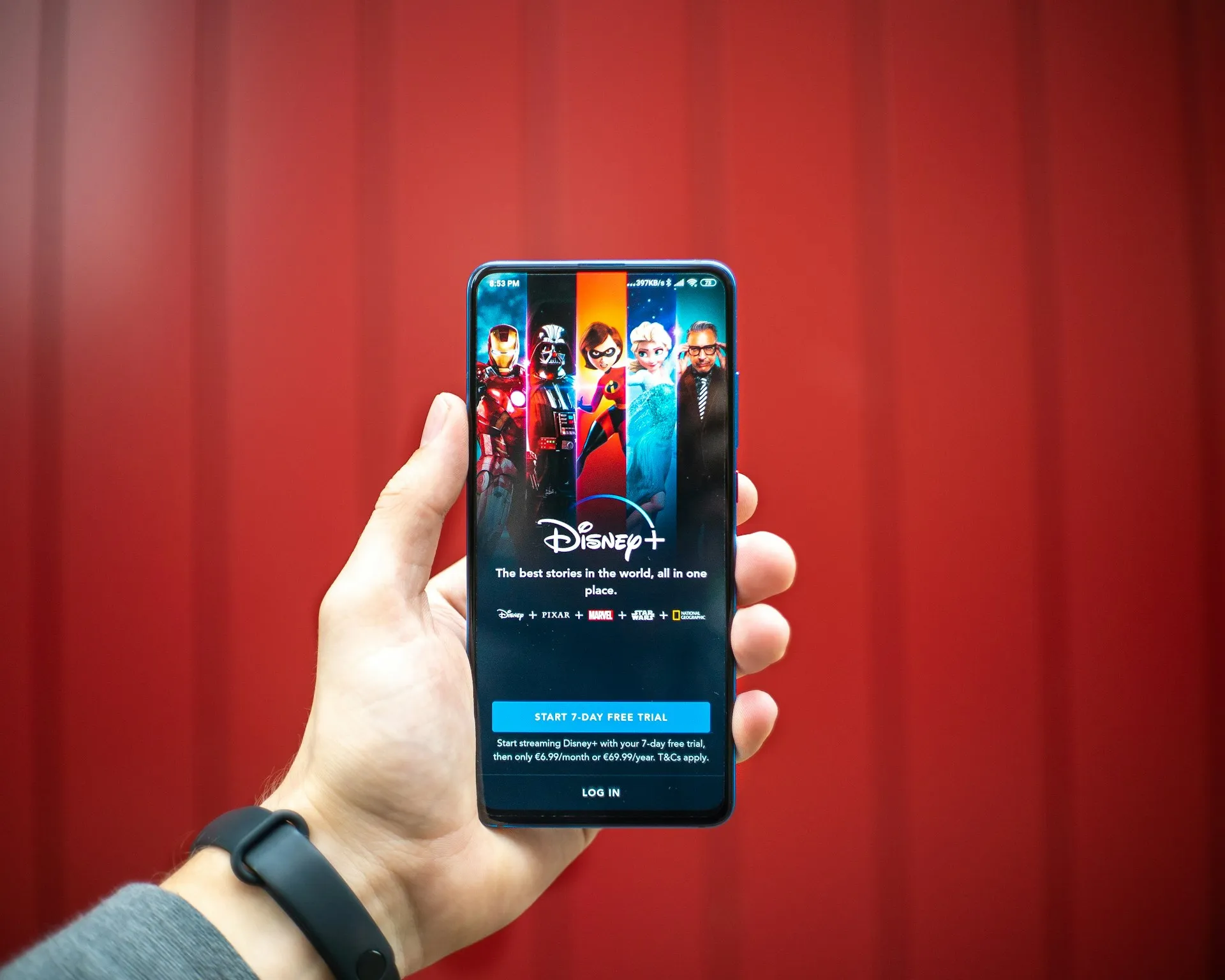
Disney is internally discussing making some Disney+ content available without a subscription, according to two people familiar with the matter. Adam Smith, Disney's product and tech chief, raised the idea at a company streaming town hall this week, offering no timeline and no defined scope.
The report is based on unnamed insiders with no on-record confirmation from Disney. What's been reported is an internal conversation, not a product plan. Those are different things, and the reporting doesn't try to close that gap.
The discussions are framed internally as a response to YouTube drawing more viewers to their television sets, with a free offering positioned as a way to help Disney+ stand out among paid streamers, per the reporting.
What the Disney+ free tier reporting actually says
Smith raised the concept at Thursday's streaming town hall, according to one staffer present. Two people familiar with the broader discussions separately confirmed the conversations are ongoing. Smith shared neither a scope nor a timeline.
Every version of the reporting describes "some content" going free, not the platform itself becoming a free service. That distinction carries real weight. A fully open catalog would put Disney+ in direct competition with free ad-supported streaming services like Tubi and Pluto TV. Selective free access is a different instrument aimed at a different problem: getting more people inside the app rather than dismantling the subscription model.
The competitive framing Disney is reportedly using internally is specific. The discussion is positioned as a response to YouTube drawing more viewers to their television sets, according to the reporting. That framing suggests the immediate concern is reach and living-room presence, not subscriber churn or pricing pressure.
What remains unknown is almost everything operational. Whether free content would carry ads, which titles would qualify, whether account creation would be required, and how Disney plans to structure a free layer alongside existing paid tiers: none of that surfaces in available reporting.
Why the ad-supported tier complicates the math
Disney+ already operates an ad-supported paid plan at $11.99 per month. The Disney+ and Hulu bundle runs $12.99 with ads or $19.99 without, per the reporting. A free tier would need to sit below a plan that was itself built for price-sensitive subscribers. That's a tighter gap to manage than most streaming services have faced when launching a free offering.
Most free streaming tiers in the industry have been introduced at the base of a simpler pricing stack, giving the free product room to be genuinely useful without directly threatening the entry-level paid option. Disney doesn't have that runway. The $11.99 tier is already low. Any free layer has to deliver enough value to attract non-subscribers while staying narrow enough that current subscribers don't start doing the math.
The economics of advertising add another dimension. If Disney runs ads against free content, it collects revenue from non-paying viewers rather than treating free access purely as an acquisition cost. That changes the internal calculus: a free tier with ads is a business in its own right, not just a marketing budget line. Whether that's how Disney is framing the idea internally is not addressed in current reporting, but the choice to include or exclude advertising would signal a lot about what the company actually intends to build.
The onboarding case, and where it gets complicated
The clearest argument for a Disney+ free streaming option is as an onboarding tool. Removing the credit card requirement from a first experience with the platform lowers real friction for casual or lapsed viewers. Someone who hasn't subscribed since a free trial expired two years ago is a better candidate for free access than a current subscriber.
Current subscribers are largely unaffected by a free tier unless what's available for free is substantial enough to prompt them to reassess what they're paying for. That's where scope becomes the central question.
Disney's broader platform ambitions are relevant context. Executives said in May that the goal is to build Disney+ "beyond a premium streaming video service," focusing on making the platform "more engaging, more personalized, and more central to how fans experience our brands," with early interface changes already contributing to measurable engagement gains, The Hollywood Reporter reported two months ago. CEO Josh D'Amaro has described the platform's future as an "immersive, interactive digital centerpiece" for the company, Variety reported at the same time.
Free access to some content fits that direction as a front-door mechanism, a way to draw people into an experience they might then pay to extend. But the platform's ambition doesn't resolve the cannibalization risk on its own. A vision for engagement doesn't automatically determine which titles end up behind a paywall and which don't.
The line Disney has to draw, and why it's hard to draw precisely
How much content qualifies as "some content" is the decision that determines whether this works. Keep it narrow enough, and it functions as a sampler, generating discovery without giving anyone a reason to cancel a subscription. Make it broad enough to satisfy a casual viewer, and the $11.99 ad-supported tier starts to look like something you could skip.
Disney would need to find natural separation points in its library, content that demonstrates the platform is worth visiting without approximating what a paying subscriber actually gets day to day. That line exists in theory. Whether Disney's internal discussions have reached any agreement on where to draw is not reflected in current reporting. The fact that Smith raised the idea without sharing a scope suggests the answer isn't settled yet.
What to watch for as this develops
Disney is discussing free access to some Disney+ content, according to two people familiar with the conversations. Nothing about format, timing, or content selection has been confirmed, and Disney has issued no on-record statement, Business Insider via DNYUZ reported.
The most consequential question still unanswered is which content would be free. That decision shapes whether a Disney+ free plan functions as a discovery tool pulling viewers toward a subscription or as something subscribers might reasonably use instead of paying. Most of the strategic analysis follows from that one call.
Three markers are worth tracking as this develops. First, whether a free tier comes up in Disney's next earnings call. If executives raise it in that forum, the idea has moved from internal conversation to investor-facing strategy, a meaningful escalation. Second, whether any free content carries advertising.
The reported framing points to reach as the primary goal, but ad-supported free content would indicate Disney sees this as a standalone revenue layer, not just subscriber acquisition spend. Third, whether the free titles, if any, are new releases or older library content. New content offered for free creates a direct alternative to paying; library depth used as a sampler carries considerably less downside for the paid tier sitting just above it.
Those three details, when they arrive, will answer most of what current reporting leaves open.







Comments
Be the first, drop a comment!