




Roku's market position has a way of making the platform look more capable than it is. Across U.S. broadband households, Roku OS accounts for 28% of connected TV platform usage, ahead of Samsung Tizen at 23%, with Amazon Fire TV, LG webOS, and Vizio SmartCast trailing at a distance, according to Parks Associates research.
The question behind Roku OS missing features is whether those gaps are incidental or structurally baked into the product strategy. Platform rankings have held consistent over time, with Roku showing modest growth and Samsung maintaining a strong installed base, per the same research. That consistency is worth reading as a structural signal, not just a market snapshot. When a platform is that durable and that widely deployed, its limitations inherit the same scale.
Parks Associates Director Michael Goodman puts the stakes plainly: operating systems determine what content consumers see, how services are positioned, and how advertising is delivered. With AI-driven search and personalization becoming the new competitive standard for TV operating systems, the firm argues that platform control will only matter more in the years ahead. This is the context in which Roku's specific shortcomings land.
Two of them stand out, both rooted in the same design choice. Roku's commitment to simplicity and broad hardware compatibility is genuine and largely successful. It also creates a ceiling. That ceiling shows up in how Roku approaches discovery and personalization, and more concretely in the developer environment that determines what streaming apps can actually deliver on Roku hardware. For casual viewers and budget buyers, none of this may register. For users who expect their platform to keep pace with what TV operating systems are about to become, it does.
How Roku built its lead and why the design philosophy behind it matters
Roku's dominance was built on price, free content aggregation, and a setup experience that removed nearly every barrier between a user and their first stream. That's still the core value proposition, and it's still effective.
The platform currently offers more than 40 free streaming channels spanning categories including sports, drama, home, and crime, according to Roku's official feature notes. It has also expanded internationally, adding free live TV in Brazil and integrating the UK's publicly backed Freely service, supported by the BBC, ITV, Channel 4, and Channel 5, into new Roku TVs as of June 2025.
On the software side, Roku pushes major OS updates automatically across its device lineup from OS 8 through the current OS 15, sparing users on inexpensive hardware from any manual update management.
The design philosophy that makes all of this work, consistency across a wide range of hardware, a stripped-back interface, automatic updates, is also what produces Roku's limits. It's not a strategic error. The tradeoff that makes the platform accessible at scale is the same one that makes it harder to advance quickly at the platform level. That tension shows up first in what users see on screen, and more sharply in what developers can build underneath it.
Discovery and personalization: what Roku is missing at the platform intelligence layer
The competitive expectation for a platform running on 28% of U.S. streaming households isn't just organized content. It's content that surfaces intelligently: search that spans apps without requiring users to know which service holds a title, recommendations that reflect actual viewing patterns, personalization that compounds over time rather than resetting with every session. Roku's most recent updates improve usability. They don't move the needle on intelligence.
Roku's late-May 2026 Home Screen redesign added a broader personalization push, including Quick Access, For You recommendations, Your Daily Scoop, Destinations, and Roku City integrations, while earlier 2025 updates expanded search, Bluetooth headphone support, and sports features. These are real improvements. Easier search within a section, wireless audio, a sports row that reflects your teams, all of that makes the platform more pleasant to use day to day.
What they may not yet prove is that Roku has closed the gap on the deeper AI-driven discovery layer Parks Associates identifies as the next competitive frontier. The firm argues that AI-driven personalization, the kind that doesn't just catalog content but anticipates it, is where platform competition is heading. Roku's What to Watch feature aggregates titles across services, which is useful.
But search within a zone is not the same as cross-app search that understands your intent. A sports highlights row built on manually selected favorites is not the same as a recommendation engine that infers preferences from behavior. The distinction matters: one reduces friction in finding what you already know you want, the other surfaces content you didn't know to look for. Roku's documented updates are squarely in the first category.
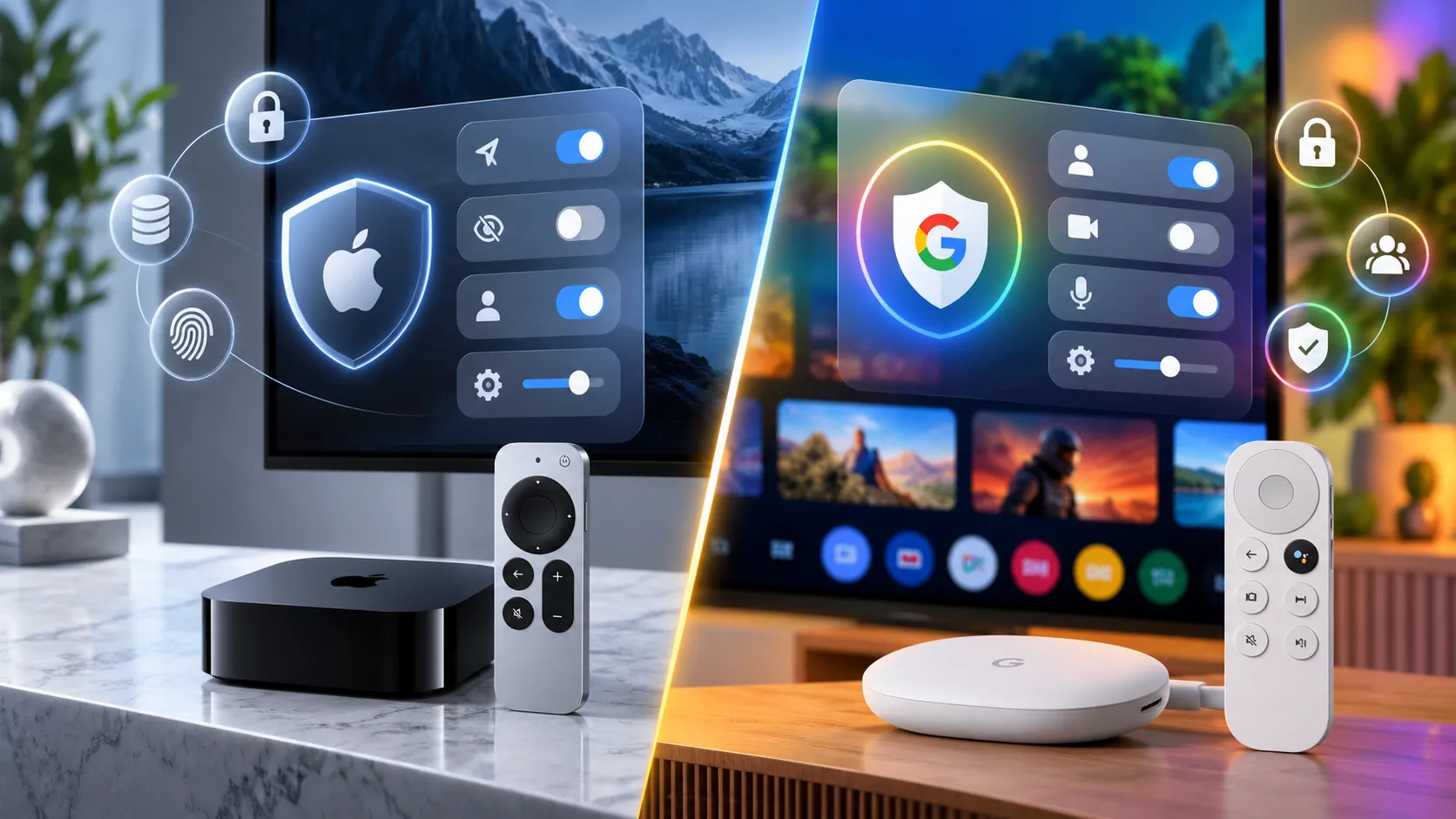
That gap shows up in competitive coverage, too. A review of Google's TV Streamer (4K) published last year called Roku's Streaming Stick 4K "Roku's best" before concluding the time had come for a replacement, because Google had designed its product so that the software was "by far the most interesting part" of the experience, according to Expert Reviews.
The same review noted that newer Roku hardware made Google's device look slightly overpriced. That's the tension in a sentence: Roku wins on value, rivals invest in software depth. One review isn't a verdict on the category, and the Roku limitations described here aren't unique to any single comparison.
But the pattern it describes fits what Roku's own update notes show: Roku has historically emphasized accessibility and content breadth, and its newest personalization push still needs to prove it can match rivals on deeper inference-driven discovery.
That same surface-level simplicity, the clean experience users appreciate, is built partly on constraints that developers absorb invisibly underneath it.
The developer layer: where Roku OS missing features become a capability ceiling
The clearest evidence of Roku's structural constraints doesn't come from product reviews. It comes from Roku's own developer documentation, which describes a certification environment built around consistency and cost control, with real consequences for what apps can do and how fast they can evolve.
Roku's certification process flags deprecated APIs as errors that block publication. Any app using a discontinued function will fail Roku's Static Analysis tool, and all reported errors must be resolved before an app can be published or updated, as Roku's developer documentation makes clear. The practical effect is that a developer who falls behind on Roku's API migration schedule doesn't get a grace period. The app breaks on the current OS, and there's no fallback.
The most consequential recent example: Roku OS 14.5, which rolled out in April 2025, ended support for SceneGraph 1.1, the app framework version that had been deprecated since Roku OS 9.0 back in 2018. Apps that hadn't completed the migration to SceneGraph 1.2 may stop functioning properly on any device running OS 14.5, per the same developer documentation. A seven-year migration window is long by any reasonable standard.
But that hard cutoff is the point: when the window closes, it closes completely. A developer that deprioritized the migration because their app still functioned finds it broken on Roku's current OS with no intermediate option available.
The third example is subtler, and in some ways more telling about how Roku's hardware-compatibility priority shapes the developer environment. Access to the Video.manifestData field, which provides information about how video content is structured for playback, has been restricted and removed from Roku's external documentation. The reason, per Roku's developer documentation, is that it isn't compatible across all device platforms, particularly lower-end devices. The underlying capability exists. It's been restricted because it doesn't work reliably across Roku's full hardware range. That's not a bug or an oversight; it's a deliberate choice to maintain consistency across cheap hardware. Every developer building for Roku inherits that ceiling.
The consumer-facing consequence of this environment is rarely a visible error. It's subtler and more persistent. Streaming apps on Roku may offer fewer configuration options, receive feature updates later, or implement capabilities in reduced form compared to what the same service offers on other platforms, because developers are working within constraints that don't apply on Apple TV or Google TV.
Users on budget-tier Roku hardware may encounter a noticeably thinner version of a streaming service they use on another device, not because the app is poorly built, but because what could be built was narrower to begin with. These Roku limitations don't affect a small subset of edge cases. They're baked into how the platform handles scale across a wide range of device generations and price points.
Roku vs other smart TV platforms: default choice versus deliberate choice
Roku's 28% share is stable and its value proposition is real. According to Parks Associates, the platform earns its position for a wide range of users, particularly those who primarily want free content, simple setup, and a reliable experience without active management. Nothing in this analysis changes that.
What it does change is the basis for choosing Roku. Casual streamers and budget buyers get a platform well suited to their priorities. The free content library is genuinely broad, the update process is invisible, and the setup experience is still among the least painful in the category. For that user, Roku's tradeoffs are largely irrelevant.
Heavy streamers are a different case. Users who care about recommendation quality, who use apps that push frequent feature updates, or who regularly compare experiences across platforms are more likely to notice where Roku's ceiling sits.
The discovery section of the platform tells them what's popular and what's free; it's less equipped to tell them what they'd actually want to watch next. Apps they use may lag behind what those same services offer elsewhere, not visibly enough to cause frustration on any given night, but consistently enough to matter over time.
The stakes of that distinction are rising. Parks Associates projects that AI-driven personalization will become the standard competitive axis for TV operating systems in the coming years, with platform ecosystems growing more consequential as that shift plays out.
A platform optimized for today's definition of simplicity may find that definition narrowing as the category evolves around it. Roku's accessible, consistent, affordable approach has held a structural lead for years. Whether it holds that lead as the software layer becomes the primary battleground is a different question, and one the current update trajectory doesn't yet answer.
The most widely used platform isn't automatically the right one for every user. Knowing the difference, and which side of that line your habits put you on, is the actual decision.


Comments
Be the first, drop a comment!