



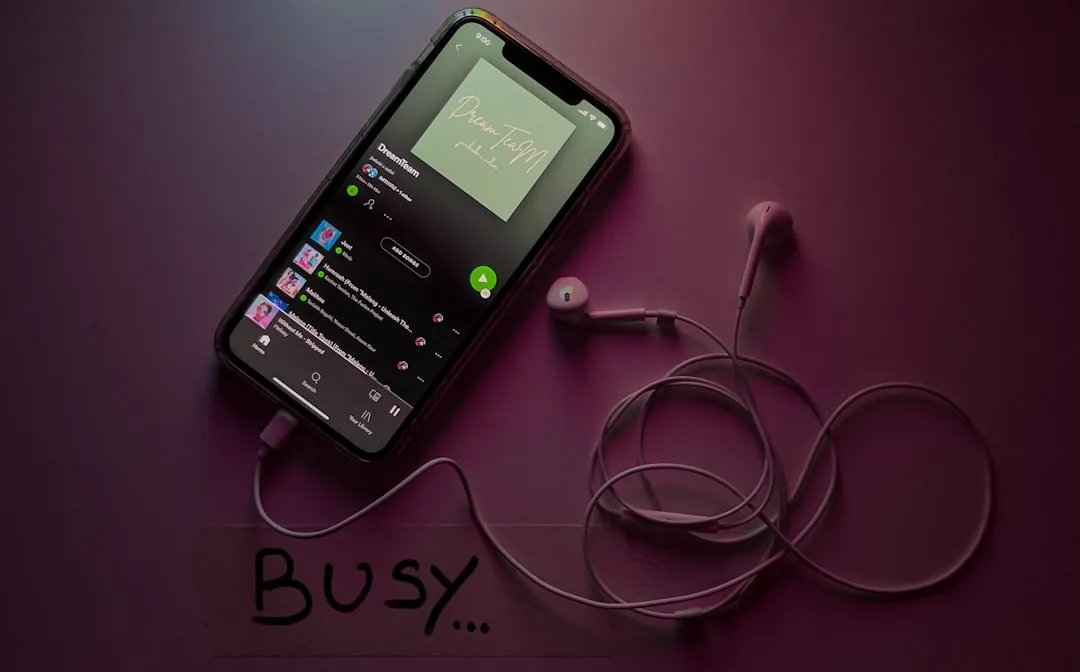
Spotify Apple HLS Video Podcast Support and Distribution API Explained
Spotify made two video podcast announcements today, and they are not the same announcement. The first is live now: the company has activated its Distribution API for five third-party hosting platforms, giving creators on those platforms direct access to Spotify video distribution and Partner Program revenue without switching hosts. The second is a forward commitment: Spotify for Creators and Megaphone will add Spotify Apple HLS video podcast support later in 2026, built in coordination with Apple, allowing Spotify-hosted creators to reach Apple Podcasts without changing their existing setup. Taken together, the announcements suggest Spotify is trying to become the monetization layer for video podcasters regardless of where their content lives or where audiences watch it.
Here is the practical split:
- Live today: Creators on Libsyn, Podigee, Audioboom, Audiomeans, and Podspace can now push video to Spotify and access Partner Program monetization with no workflow changes, per PPC Land
- Later in 2026: Spotify for Creators and Megaphone will support Apple Podcasts' HLS video format, enabling cross-platform distribution for Spotify-hosted creators, per 9to5Mac
- Not included: Creators on Acast, Omny Studio, ART19, Simplecast, and other platforms are currently unaffected by either announcement
Spotify has historically required video to be uploaded directly to its platform, a constraint that locked out anyone managing content through a third-party host. These moves start dismantling that requirement, though incrementally and with key economics still unresolved.
Who gets what, and when
Three groups of creators are affected differently.
Those on the five newly integrated platforms can act now. The Distribution API activation is the first public launch of a feature Spotify announced in January, and it adds a direct video upload path to Spotify alongside each platform's existing RSS feed rather than replacing it.
Those using Spotify for Creators or Megaphone get something different and later: Apple Podcasts distribution via shared HLS infrastructure, with no setup changes required, according to 9to5Mac. Spotify says it is "actively working on this integration in coordination with Apple" and will share timeline details soon.
The notable omission is the third group. When Spotify announced the Distribution API in January, Acast and Omny were both named as planned launch partners. Neither appears in today's live rollout, Spotify Newsroom versus PPC Land today. Spotify has not explained the delay. It is also unclear whether creators on the five live platforms will eventually gain the Apple HLS distribution path, or whether that stays limited to Spotify's own tools. For now, this is partial interoperability across two separate timelines.
Why Apple's HLS format matters and what Spotify Apple HLS video podcast support changes
Apple announced its HLS-based video podcast upgrade in February 2026 and, as 9to5Mac reported, shipped the upgraded experience to iPhone, iPad, Vision Pro, and the web at the end of March. The headline capability for creators is not adaptive bitrate streaming or offline downloads, though both are included. It is dynamic video ad insertion inside Apple Podcasts, including host-read spots, opening the broader video advertising market on Apple's platform for the first time, per Apple Newsroom.
HLS is not proprietary to Apple. It is an open adaptive-streaming standard used throughout the video industry. Applying it to podcast delivery creates a potential shared technical layer rather than a walled format. Apple's launch partners were Acast, ART19, Omny Studio, and SiriusXM/Simplecast. Spotify choosing to build its integration "in coordination with Apple" rather than around it signals deliberate alignment, and that coordination is what gives the "publish once, reach both platforms" promise any credibility.
The unresolved question sits in the ad layer. Apple will charge participating ad networks an impression-based delivery fee for dynamic ads on Apple Podcasts starting later this year; it does not charge creators or hosts for distribution, per Apple Newsroom. Spotify has stated it wants to support monetization for video viewed on Apple Podcasts, so creators "don't have to choose between audience reach and revenue." How those two fee structures coexist when the same ad plays on Apple Podcasts through a Spotify-managed deal is the central thing Spotify has not yet answered.
What Spotify is actually offering creators and what's still a promise
The Partner Program has real substance for creators who qualify. Eligible creators can earn Premium video revenue from Spotify subscribers watching ad-free, ad revenue when free-tier users watch or listen, and, coming through the Distribution API, direct sales and sponsorship management tools without a host switch, Spotify Newsroom. The program launched in January 2025 across the US, UK, Canada, and Australia. Spotify executive statements, cited by PPC Land, put creator payouts at 300% year-over-year growth in January 2025 and video consumption up more than 90% compared to pre-program levels. Those figures are self-reported and have not been independently verified.
Spotify also lowered the eligibility bar in January 2026, cutting the required listener count from 2,000 to 1,000, hours consumed from 10,000 to 2,000, and published episodes from 12 to 3, PPC Land reports. That is a deliberate funnel expansion, and it happened the same day Spotify formally announced the Distribution API. This is not Spotify's first pass at broadening video access, either. Four years ago, in April 2022, Spotify opened video publishing through Anchor to all creators in the US, UK, Canada, Australia, and New Zealand, with analytics, subscriptions, and interactive features, Spotify Newsroom. Today's Distribution API is the next layer on that foundation.
What remains unresolved is how cross-platform revenue actually works. Spotify has committed to supporting monetization for video viewed on Apple Podcasts but has not yet explained the mechanics. "We will share more information soon on how video monetization for Apple Podcasts-distributed video will work through our creator platforms," the company told 9to5Mac. Until that arrives, the cross-platform earnings promise is a stated direction, not a working system. Creators on third-party hosts should also note that it is currently unclear whether the Apple HLS path will extend to them or stay confined to Spotify-hosted tools.
Scale context and what to watch
Spotify hosts more than 530,000 video podcast shows as of early 2026, up from roughly 500,000 in November 2025, and more than 390 million users have streamed video content on the platform, PPC Land reports. At that volume, the question is no longer whether video podcasting is mainstream. It is who controls the monetization layer once common delivery standards normalize. If HLS becomes the shared format across Spotify and Apple Podcasts, the differentiation migrates entirely to the ad stack: who serves the ads, who owns the attribution data, who sets the terms for creators earning across both audiences.
Two data points will clarify whether today's announcements are the front edge of genuine interoperability or something narrower. The first is whether Spotify's cross-platform ad economics survive contact with Apple's impression-fee structure. The second is whether Acast and Omny, announced as launch partners in January and absent today, eventually complete their integrations. If both resolve cleanly, Spotify's platform-agnostic framing holds. If they don't, the rollout looks more selective than the framing suggests.






Comments
Be the first, drop a comment!