



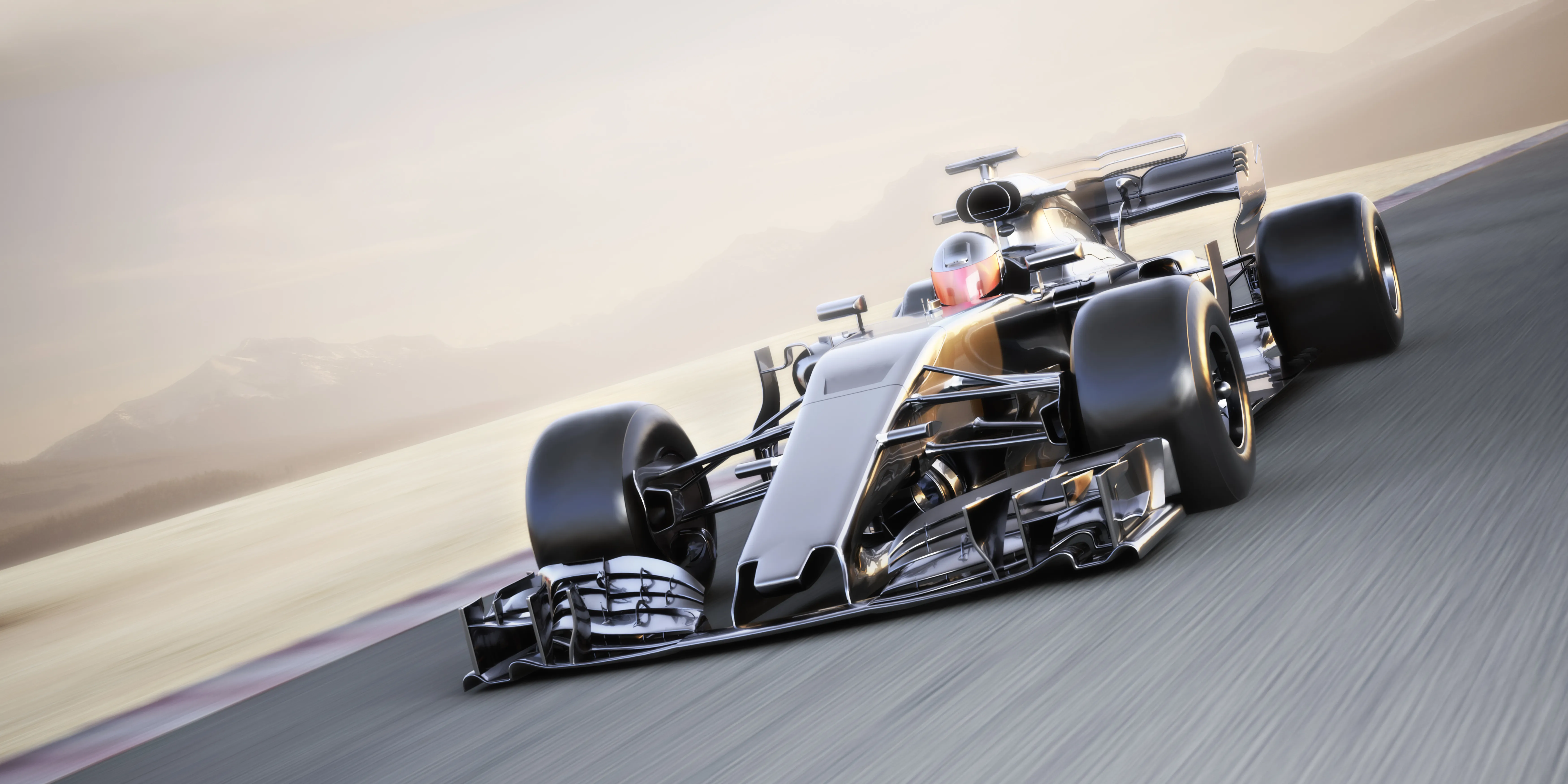
Apple SVP Eddy Cue wants an F1 movie sequel, and he wants more Formula 1 streaming rights. Those two ambitions point in the same direction: Apple is trying to own more of the F1 fan experience, not simply carry races under contract through 2030. A sequel to F1 The Movie is in development, Apple's U.S. rights deal is now in effect, and the question now is whether Apple's platform-first approach actually expands F1's U.S. audience or just repositions it behind a different paywall.
What Apple paid, and what Liberty really got
Apple is paying approximately $150 million per season for exclusive U.S. media rights through 2030, up from ESPN's roughly $85 million, per SportBusiness Media. The trajectory is striking, but the headline figure is less straightforward.
F1 TV, Formula 1's standalone U.S. streaming product, will be folded into Apple TV at no extra charge to Apple subscribers. That may also offset some of Liberty's gain by replacing F1 TV's standalone U.S. subscription revenue, according to SportBusiness Media analysis. Net that out, and the real annual uplift may be smaller than the headline rights-fee increase suggests.
Investor reaction has been pointed. At a Liberty Media earnings call in February 2026, a Wolfe Research analyst asked executives what they would say to investors who called the Apple deal a "disaster." Liberty executive Derek Chang responded by saying he had met with Apple's Tim Cook and Cue at the Super Bowl, and that Apple is "putting the entire weight of the company behind F1," per Sports Business Journal. The short-term investor reaction has been more cautious than Apple and F1's public messaging, with Sports Business Journal reporting that analysts questioned the deal's near-term economics.
For Liberty, the calculation is essentially a long-term bet: accept a more modest near-term financial gain in exchange for a partner that might build the U.S. market faster than linear television ever could.
Holmes acknowledged the tradeoff plainly. "It's a good uplift, significantly more of an uplift that you would get from a mature F1 media market, such as the big five markets in Europe," he told SportBusiness Media. Not a ringing endorsement of the headline number, but a frank acknowledgment that U.S. F1 rights are still nowhere near their ceiling.
What the F1 movie sequel has to do with Apple's streaming rights
Before Apple's first F1 season began, Apple had already run what SportBusiness Media called "the longest, most sophisticated and most expensive pitch ever" for a sports-rights partnership: the original F1 film. Co-produced by Apple and Lewis Hamilton, starring Brad Pitt, the film grossed $630 million worldwide and earned four Oscar nominations, including Best Picture, per Crash.net. Producer Jerry Bruckheimer has since confirmed a sequel is in development, as reported by People.
A sequel to F1 The Movie is best understood as a continuation of that commercial argument. When Cue was asked about a follow-up film at a February 2026 Apple TV press event, he pivoted immediately to the streaming product: "We've got 24 F1 movies this year on Apple TV," he said, framing every 2026 Grand Prix as its own cinematic event, per The Hollywood Reporter. Film success validates Apple's ability to generate cultural momentum around Formula 1. That cultural momentum supports the case for the rights investment. And the rights investment is what justifies Cue's push for even more.
Holmes put Apple's marketing role in concrete terms. "We saw the success of the film and how Apple marketed the film. We looked at how this massive company can get behind something," he told SportBusiness Media. The rights deal followed that demonstration.
F1 CEO Stefano Domenicali framed the direction of travel in broader terms. "The future of F1 has to be bright because it's up to us and we need to think big," he told The Hollywood Reporter. "We moved the sport not only as it was in the past on the track but we're moving the sport in a different cultural dimension. It's a matter of expanding our content." The sequel, the streaming deal, and the app ecosystem are three expressions of that same logic.
F1 TV on Apple TV: what changes for U.S. fans
The most tangible change for viewers in 2026 is consolidation. Under the ESPN arrangement, a single race weekend could scatter Friday practice across ESPNEWS, qualifying across ESPN College Extra, and the race itself across ESPN3, depending on scheduling. Holmes described the problem without softening it: "I'm not going to pretend that Friday practice in the middle of the afternoon is box office television, but if it's on ESPNEWS and then the next session is on ESPN College and then ESPN3, it doesn't help discoverability," per Sports Business Journal. Under Apple, all practice sessions, qualifying, sprints, and Grands Prix live in one place.
The tradeoff is real. Apple TV is less broadly distributed than ESPN, and the contract requires only "selected" races be made available outside the paywall, per SportBusiness Media. How many races qualify as "selected," and which ones, has not been specified. That ambiguity matters: those races will determine whether the free-to-air provision functions as a genuine growth tool or a contract technicality.
Holmes' response to the reach objection is that reach itself needs redefining. "Focusing purely on average live ratings is a very two-dimensional and linear way of looking at things," he told SportBusiness Media. "People are consuming content in ever more different ways, at different times and on different devices. The 360-degree service offering that Apple can put together can help us reach a broader audience."
That broader offering goes well beyond Apple TV. F1 content will be embedded across Apple News, Apple Maps, Apple Music, Apple Sports, and Apple Fitness+, per SportBusiness Media. Cue confirmed Apple would deploy iPhones as on-track cameras in positions conventional broadcast equipment cannot reach, with 4K and Dolby audio as baseline production standards, per The Hollywood Reporter. Holmes singled out Apple News specifically: "Apple News is the most downloaded news service in America. And in terms of sport, we will be front and centre of that now. That is incredibly valuable."
Whether any of it works
The demographic case for Apple's platform approach is solid. The 2025 Global F1 Fan Survey found that 47 percent of new U.S. F1 fans, defined as those who have been following the sport for five years or fewer, are between 18 and 24, and more than half are female, per SportBusiness Media. That audience does not organize its viewing around linear broadcast windows. It watches on demand, across devices, between events. Apple's ecosystem is built for exactly that behavior.
Apple is already claiming early traction, according to Motorsport.com. Speaking before the 2026 Miami Grand Prix, Cue said viewership for Apple's first three races was "way up" from ESPN's comparable linear numbers in 2025, and that viewers were watching more across the full race weekend. That gives Apple an early talking point, but it does not yet answer whether the platform strategy can sustain growth across a full season.
What is less settled is whether Apple will use that ecosystem aggressively enough. The comparison to Apple's MLS deal is unavoidable. Apple's 10-year, $2.5 billion global MLS agreement showed the company can build a dedicated sports product, but it has not been widely credited with transforming the league's U.S. profile. F1 is betting the approach lands differently this time, with more promotional muscle behind it. That commitment has been stated clearly by Apple executives. Whether it follows through is the open question hanging over the entire arrangement.
Three markers will tell the story as the season progresses. Whether F1 surfaces meaningfully across Apple's full app suite or remains largely confined to Apple TV. Whether the "selected races" outside the paywall are used deliberately to attract non-subscribers or exist mainly as contract compliance. And how Cue's push for expanded F1 streaming rights develops as the current deal matures. Per Sports Business Journal, that desire signals Apple sees Formula 1 as a franchise it intends to deepen its hold on, not a licensing arrangement it is running out the clock on. That ambition already has limits, per a report by MacRumors. Sky's early Formula 1 renewals in major European markets, including the U.K., Ireland, and Italy, make Apple's clearest near-term expansion path outside the U.S. harder, which leaves the American deal as the company's main proving ground. The underlying proposition that platform depth and cultural reach can do more for a sport's growth than raw linear distribution is coherent. By the end of the 2030 season, there will be an answer.



Comments
Be the first, drop a comment!