





Reviewed by: Y. Garcia
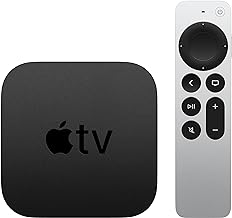
When Formula 1 announced its partnership with Apple TV for U.S. broadcasting rights, it marked more than just another streaming deal—it signals a potential transformation in how Americans will experience motorsport. Starting in 2026, Apple TV will become the exclusive home for all F1 races in the United States, replacing ESPN in what represents a strategic evolution that builds directly on their movie collaboration success.
This partnership emerged from proven synergy. Apple's F1 movie project has already grossed over $629 million worldwide and earned distinction as the highest-grossing sports film and the year's highest-grossing original feature. Now, that filmmaking technology and understanding of F1's visual storytelling translates into broadcast innovation.
Apple is reportedly paying approximately $150 million annually for this five-year arrangement—reports generally place the fee between about $140 million and $150 million per year, significantly higher than ESPN's previous $90 million deal—but the investment aligns perfectly with F1's demographic transformation. F1's U.S. fanbase reached 52 million in 2024, with 47% of new fans aged 18-24 and over half being female—exactly the streaming-first audience Apple serves.
What this means for F1 fans in America
The viewing experience is about to undergo a complete overhaul that goes far beyond simple platform migration. Starting in 2026, Apple TV will deliver comprehensive coverage of Formula 1, with all practice, qualifying, Sprint sessions, and Grands Prix available to Apple TV subscribers through their standard $12.99 monthly subscription fee with no additional tiers or add-ons.
Here's what makes this particularly attractive: F1 TV Premium will be bundled free for Apple TV subscribers, including F1 TV Premium at no extra cost for Apple TV subscribers. That keeps premium features like personalized Multiview and 4K Ultra HD/HDR streaming available within a single subscription, though some fans who previously paid only for F1 TV may now see higher overall costs than with a standalone F1 TV plan.
Apple isn't creating an exclusivity wall, though. Understanding F1's growth depends on accessibility, select races, and all practice sessions will remain free on the Apple TV app for non-subscribers. Industry reports suggest around four or five races per season will be available without subscription, ensuring casual fans can sample the sport's excitement.
The transition timeline is clearly established: Direct F1 TV subscriptions are being phased out, with annual subscriptions ending by November 2025 and monthly subscriptions ceasing renewal after December 2025.
The technology advantage Apple brings
Here's where the movie collaboration experience translates into broadcast innovation. Apple isn't just planning to stream races—they're reimagining F1 coverage using technologies developed during film production. The company has promised interactive features, including onboard cameras for all 20 drivers, potentially putting viewers in the cockpit during wheel-to-wheel battles using camera systems refined through actual F1 filmmaking.
Industry experts anticipate revolutionary viewing options: 360-degree cameras tailored for Apple Vision Pro headsets and custom camera rigs adapted from the movie's production technology. This isn't speculation—Apple treats these partnerships as laboratories for new sports viewing technologies, suggesting innovations that leverage their hardware ecosystem in ways traditional broadcasters cannot match.
The integration extends throughout Apple's ecosystem, creating interconnected F1 experiences across Apple News, Apple Maps, Apple Music, Apple Sports, and Apple Fitness+. Imagine race weekend notifications through Apple News, instant circuit navigation in Apple Maps, or F1-themed workout content in Apple Fitness+ that builds community around race schedules.
Apple's approach to streaming being "always on" rather than confined to broadcast schedules enables comprehensive coverage that adapts to how modern audiences consume content—available whenever fans want to dive deeper into the sport.
Why F1 chose Apple over traditional broadcasters
While the financial boost was attractive, F1's strategic reasoning extends beyond the revenue increase. The sport's unprecedented growth—F1 added nearly 90 million new fans globally last year—comes primarily from younger viewers who favor streaming over traditional cable packages. This demographic shift makes Apple's platform a natural evolution rather than a risky experiment.
Consider Apple's reach potential: nearly 300 million iPhone users in the USA represent untapped F1 audiences reachable through integrated ecosystem marketing. F1 CEO Stefano Domenicali emphasized this technological alignment, noting they "know Apple's power and technology capabilities" and shared passion for the sport.
The existing relationship proved crucial. Beyond the successful movie collaboration, F1 TV was even named Apple TV App of the Year in 2024, demonstrating platform compatibility and shared technical standards.
Apple's broader sports strategy provides F1 with proven streaming expertise through successful partnerships with Major League Soccer and Major League Baseball. F1 benefits from Apple's established sports streaming infrastructure while bringing premium, global, technologically sophisticated content that perfectly aligns with Apple's brand identity.
The broader implications for sports streaming
This partnership represents a fundamental evolution in premium sports distribution, potentially establishing a new model that combines technological innovation with targeted audience development. Apple's comprehensive coverage that's always available approach differs fundamentally from traditional scheduled programming, creating viewing experiences that adapt to modern consumption patterns.
The success of combining premium technology with a surging fanbase could influence how other international sports properties approach broadcasting rights. Instead of regional broadcast deals, we might see more direct-to-consumer streaming arrangements that prioritize technological integration and ecosystem-based fan engagement over traditional viewership metrics.
Global expansion possibilities are intriguing. While this partnership covers the United States market exclusively through 2030, both parties hint at broader ambitions. Apple's senior vice president Eddy Cue expressed hope that "this is what we're doing forever", suggesting long-term vision extends beyond the current five-year agreement.
Liberty Media's recent purchase of MotoGP creates additional possibilities for comprehensive motorsport streaming destinations that could leverage Apple's technology capabilities across multiple racing series, potentially revolutionizing how motorsport fans consume content globally.
What happens next for racing fans
The transformation is already underway with clear transitional milestones established. F1 TV subscriptions are being phased out according to the established timeline, giving current subscribers several months to plan their transition to Apple TV.
Apple and F1 continue developing specific coverage innovations. Apple's senior vice president, Eddy Cue, has promised "big plans" for F1 coverage that builds on the technological foundation established through their movie collaboration. While they're still determining whether to use F1 TV's existing broadcast approach or develop independent coverage, the promise is to leverage cutting-edge filmmaking technology for live race broadcasting.
Confirmed features include F1 broadcasts on Apple TV being available in both English and Spanish with closed captioning, ensuring accessibility for diverse American audiences.
The potential for expansion beyond F1 creates exciting possibilities. With Liberty Media now controlling both F1 and MotoGP, there are clear synergies that could benefit Apple TV subscribers interested in comprehensive motorsport content, potentially creating the most advanced motorsport streaming platform available.
Bottom line: starting in 2026, Apple TV becomes your destination for Formula 1 in America, promising a viewing experience that leverages movie-production technology and ecosystem integration to bring fans closer to the action than traditional broadcasting ever achieved. The 2025 season on ESPN becomes a transition year—come 2026, it's all about discovering how Apple's technological innovation transforms the pinnacle of motorsport into an entirely new viewing experience.







Comments
Be the first, drop a comment!