





2026 Apple TV 4K Rumors: A17 Pro, Siri Delay, and Release Window
Apple's next streaming box has reportedly been finished for months. The hardware looks solid. The holdup is a version of Siri that isn't ready and that delay reveals more about this product than the specs do.
The current Apple TV 4K launched in October 2022. Rumors about a successor have circulated since 2024, with Gurman reporting several times in 2025 that Apple was aiming for a launch before year's end a window that passed without any announcement. The device didn't appear at Apple's early 2026 event either, which introduced the iPhone 17e and MacBook Neo. Now, the 2026 Apple TV 4K rumors point to September as the earliest credible window, and the reason for that date comes down to a single dependency.
Software is holding back hardware. That inversion is the organizing fact of this story.
Apple TV 4K 2026 release date: why the window keeps moving
According to Bloomberg's Mark Gurman, new Apple TV and HomePod mini models have been ready since last year sitting finished on a shelf while Apple works through reliability problems with a more capable version of Siri. Apple reportedly linked the new Apple TV to "new artificial intelligence features" that have now been pushed to iOS 27, expected to ship publicly in September alongside the iPhone 18 Pro.
The path to September has not been direct. Apple originally aimed to launch the Apple Intelligence version of Siri in iOS 26.4. That slipped to a potential iOS 26.5 window, and has now settled on iOS 27 because Siri still wasn't working reliably enough. Some capabilities may arrive in iOS 26.5 around May, but the full rollout is a September story.
The Apple TV isn't the only device in this holding pattern. Gurman confirmed that a new full-sized HomePod, an updated HomePod mini, and a rumored home hub are all waiting on the same Siri milestone. Corresponding tvOS and HomePod software updates are expected to follow the same iOS timing, which makes this a coordinated platform release rather than a collection of products that happen to share a launch window.
Retail inventory for Apple TV and HomePod models has reportedly been running low at Apple stores globally. MacRumors notes this doesn't definitively signal an imminent launch, given that the Siri dependency hasn't been resolved. It's a data point worth tracking, not a launch signal.
WWDC in June is the next meaningful checkpoint. iOS 27 enters developer beta there, and Apple will almost certainly preview the new Siri capabilities in detail. That's likely when the living-room picture gets clearer.
What the delay tells you about Apple's home platform strategy
The delay isn't just a scheduling problem. Read across the full picture the A17 Pro requirement, the N1 networking chip, Thread and Matter hub support, the Siri dependency, and the simultaneous hold on Apple TV, HomePod mini, full-sized HomePod, and a dedicated home hub and a strategic pattern emerges.
Apple appears to be repositioning the Apple TV from a premium streaming box into something closer to a home AI endpoint. The A17 Pro is the minimum chip Apple makes that supports Apple Intelligence. The N1 chip brings Thread support, making the device a capable hub for smart-home accessories. The Siri integration is, by Gurman's reporting, the explicit reason the hardware hasn't shipped. These aren't independent features that happen to be bundled together. They're the components of a device Apple seems to want sitting at the center of the connected home, handling voice queries, controlling accessories, and running AI-assisted features from the living room.
The HomePod lineup being held on the same schedule reinforces this reading. Apple is building a coordinated home platform, and the Apple TV is apparently meant to be part of it on day one.
The risk in that strategy is real. Apple is holding a finished product to anchor it to software whose living-room form hasn't been publicly demonstrated. If the Siri experience on tvOS turns out to be thinner than the wait implied, that's a credibility problem for the whole platform push, not just one product.
2026 Apple TV features that actually matter
The chip upgrade: A17 Pro replaces the A15 Bionic
The biggest hardware change is the processor. Rumors consistently point to the A17 Pro, the chip introduced in the iPhone 15 Pro and later used in the iPad mini 7. Built on a 3-nanometer process versus the A15's 5nm, the A17 Pro delivers better performance per watt and lower heat output. It also includes hardware-accelerated ray tracing for more realistic lighting in games, though whether Apple pursues that seriously on tvOS remains a separate question.
The chip choice matters beyond raw performance. The A17 Pro is the oldest chip Apple currently makes that supports Apple Intelligence, making it the minimum hardware threshold for the AI features Apple is building its home platform around. The current A15 doesn't qualify for Apple Intelligence at all. That's not an accident; it's the specific reason this chip makes sense for a device Apple wants tied to its AI rollout.
Connectivity: Wi-Fi 7, Bluetooth 6, and Thread via the N1 chip
The 2026 Apple TV is also expected to include Apple's N1 networking chip, adding Wi-Fi 7, Bluetooth 6, and Thread support. These aren't headline features, but they expand what the device can do in meaningful ways.
Wi-Fi 7 works with the 6GHz band available on newer routers. That band is faster and less congested than the 2.4GHz and 5GHz bands used by older standards which matters more for a dedicated streaming device than for most other home hardware. Bluetooth 6 is expected to support controllers and earbuds. Thread support means the Apple TV would continue serving as a Thread border router and Matter hub, able to control compatible smart-home devices directly from the living room.
Design: nothing you'll see from across the room
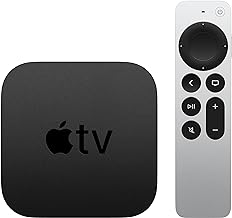
The exterior is expected to be unchanged. The 2026 Apple TV is reported to keep the same squircle shape, black plastic material, and overall dimensions as the current model. No credible report suggests any visual redesign. Apple's implicit argument is that the performance and software story is the upgrade reasonable for a device that lives behind the TV, but it puts real pressure on the Siri features to deliver something users can actually feel.
What these upgrades mean for different buyers
The gap between the current model and the rumored 2026 version depends almost entirely on what you use it for.
Casual streamers will notice the least difference. The practical streaming experience Netflix, Apple TV+, YouTube, 4K HDR playback is already solid on the A15-based model. The A17 Pro and Wi-Fi 7 will improve headroom and connection stability, but someone who turns on the TV to watch shows and nothing else is unlikely to see a transformative change. The case for waiting is weaker here.
Apple ecosystem users with smart-home setups have the clearest reason to wait. The combination of Thread border router capability and Matter hub support means the Apple TV becomes genuine infrastructure for smart-home devices. If you're running HomeKit accessories or planning to expand into them, the upgraded connectivity package is meaningful. The N1 chip is expected across Apple's home product lineup, which suggests Apple is standardizing on a single networking foundation for the entire ecosystem.
Buyers interested in Apple Intelligence face the most uncertain situation. The A17 Pro is the minimum hardware requirement for Apple Intelligence, so the current A15 model is locked out of those features entirely. The new Apple TV is linked to Apple Intelligence capabilities, and the device won't ship until those features are ready. But what Apple Intelligence actually does on a television screen whether that means better content discovery, voice-controlled home automation, on-screen assistance, or something else entirely has not been publicly demonstrated. You'd be waiting for hardware that's ready for software whose living-room form hasn't been defined yet.
What the rumors don't tell you
Several meaningful questions remain unanswered.
Pricing and lineup configuration: Rumors suggest Apple may offer a lower-cost option either a second stripped-down model or by keeping the current Apple TV around at a reduced price. No specific price points have surfaced, and the two-model scenario lacks corroboration. The current model sells for $129. Whether the 2026 version holds that price, goes lower, or moves up isn't known. A meaningful price cut would be a competitive signal against Roku and Amazon Fire TV at the sub-$50 end, but there's no firm evidence Apple is ready to go there.
Apple Intelligence on tvOS: No reporting has specified what a revamped Siri actually looks like on a TV screen whether it will be on-device or cloud-assisted, whether any TV-specific UI has been designed, or whether the feature set centers on search, home control, or content recommendations. Until Apple demonstrates it, likely at WWDC in June, that question stays open.
Other specs: RAM, storage tiers, HDMI version, Ethernet availability, remote-control changes, and supported audio formats haven't appeared in credible reporting. The rumor picture is clear on chip and connectivity; everything else is quiet.
The decision
September 2026 is the earliest credible window for the new Apple TV, tied to the public launch of iOS 27. The A17 Pro upgrade alone is cited as a good reason to hold off on buying the current model not because the A15 is broken, but because the incoming chip sets a hardware ceiling the current one doesn't reach.
The case for waiting through September is strongest for anyone who cares about Apple Intelligence compatibility or smart-home hub performance. For casual streamers on a working device, it's harder to justify.
One thing worth keeping in mind: reported launch windows for both the hardware and the Siri features it's attached to have slipped multiple times, from iOS 26.4 to 26.5 to iOS 27. September is the current best estimate, not a guarantee. Whether the new Siri arrives that month with enough substance to justify the wait is the question this product still has to answer.


Comments
Be the first, drop a comment!