





Roku plans to let US users try Roku Labs experimental features before anyone else gets them, Android Authority reported. The company describes the program as loosely modeled on Google Labs: opt in, test features the Roku team is still building, and send feedback that Roku says "may" shape what ships next. Roku Labs isn't live yet, but Android Authority says it will be accessible directly from the Roku Home Screen; Roku has not given a specific launch date beyond 'available soon.'
The announcement arrived alongside other Roku updates already in motion. A redesigned Home Screen started rolling out across the US in late May, and a separate Roku OS 16.0 developer beta has been circulating under NDA for the past two weeks. Android Authority groups all three under one OS update preview, without saying which features, if any, will actually run through Labs.
What Roku Labs is supposed to do
Android Authority identifies Roku Stocks, Roku Weather, Backdrops Studio, and Roku Immerse as experiments still in testing through Roku Labs. It also says Roku City Dash previously graduated from Labs and is now broadly available.
Roku Labs is meant to give users early access to experimental, in-development features from the Roku team, similar to Google Labs, Android Authority reports. None of the Roku OS experimental features mentioned in the report are confirmed to run through Labs specifically. Android Authority mentions enhanced search and voice-related work in the same update preview, but nothing in that reporting ties either capability to the Labs program. Roku has highlighted four experiments still in testing: Roku Stocks, Roku Weather, Backdrops Studio, and Roku Immerse.
Roku Labs US availability and what's still unclear
Roku is limiting the rollout to the US at launch, describing the program as "available soon" rather than live now. Android Authority names the US as the initial market and gives no international timeline.
Android Authority says Labs will be accessible directly from the Home Screen, but it does not spell out any additional enrollment requirements or account-level eligibility rules. Several practical questions stay open simply because the reporting doesn't address them, not because Roku has ruled anything out:
Eligible devices and OS versions: which Roku TVs, streaming devices, or software versions will qualify, or whether older hardware gets excluded, isn't stated.
Opting out: how a participant would leave a test or roll back a broken feature isn't described.
Stability and data handling: whether Labs features might behave unpredictably in daily use, or what data participation involves, goes unaddressed.
Feedback follow-through: Roku says feedback "may" shape future releases, but whether participants ever see a result tied to what they submit isn't answered.
An official Labs announcement would need to cover most of this before the program becomes something people can actually use.
How the Home Screen rollout differs from Roku Labs
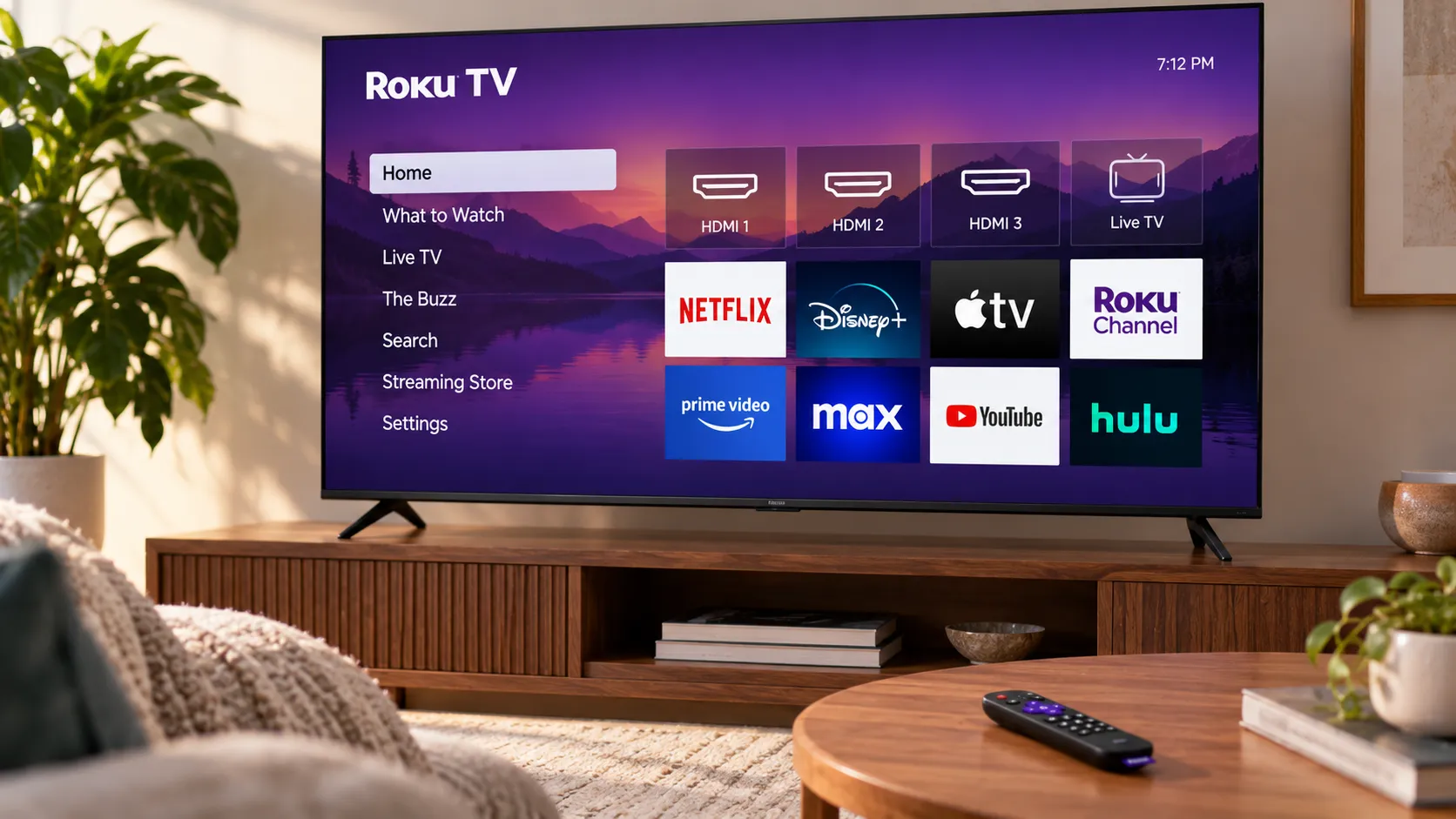
The redesigned Home Screen is a separate, already-shipping update, not a future plan like Labs. Roku calls it the first significant Home Screen change in more than a decade, reaching US Roku TVs and streaming devices starting in late May.
Roku says the redesign is built to reach over 100 million streaming households, using intelligence models that pick from billions of possible layouts for each viewer. That household figure is Roku's stated goal, not a confirmed current total, and the company hasn't published a device-by-device completion timeline. International expansion is planned for "coming months," without a firm date attached.
Roku backs the redesign with its own research: a Roku/Harris Poll survey found 82% of streamers said they'd want the show they wanted to watch to appear the moment they turned on the TV.
"When we set out to rethink the Home Screen, we knew we should listen to the people who use it every day," Roku founder and CEO Anthony Wood said in the announcement, adding that "more than 100 million households will feel the difference the moment they turn on their TV." That's a statement of intended reach, not independently verified rollout data, though it does confirm the update was built for broad distribution rather than a limited test group.
Checking for this redesign takes no sign-up. Owners can just look at their Home Screen; if it looks different from before, that's the update Roku already shipped, and it may already be live on a US Roku TV or streaming device.
Roku OS 16.0: a developer beta, not a Roku beta feature for owners
Roku OS 16.0 is being shared with developer beta partners under NDA, Roku confirmed, and it targets people building Roku channels and apps rather than device owners. It adds GPU-accelerated visual effects, including rounded corners, borders, and gradients, for Poster and Rectangle nodes in Roku's SceneGraph framework, according to the same post.
On the networking side, the update adds server-sent events support to the roUrlTransfer component and introduces a new roWebSocket component for two-way connections between apps and remote servers. None of that changes what appears on a typical owner's TV. These are developer-facing APIs for building and updating channels, not consumer settings, and nothing in Roku's beta materials ties OS 16.0 to the Labs program.
What to do now
There is no live Labs option to use yet. When the program launches, Android Authority says it will be accessible directly from the Roku Home Screen. Check whether the redesigned Home Screen has already reached a device instead, since that update needs no action and may already be visible.
The OS 16.0 developer beta has no bearing on Labs access and mainly matters to people building or testing Roku channels professionally. Keep using Roku normally, and wait for an official announcement with enrollment and compatibility details before assuming any "Labs" setting exists on a device.
Watching Roku's newsroom and support pages, rather than third-party guesses, remains the more reliable way to learn when Labs actually opens and which devices qualify.










Comments
Be the first, drop a comment!