



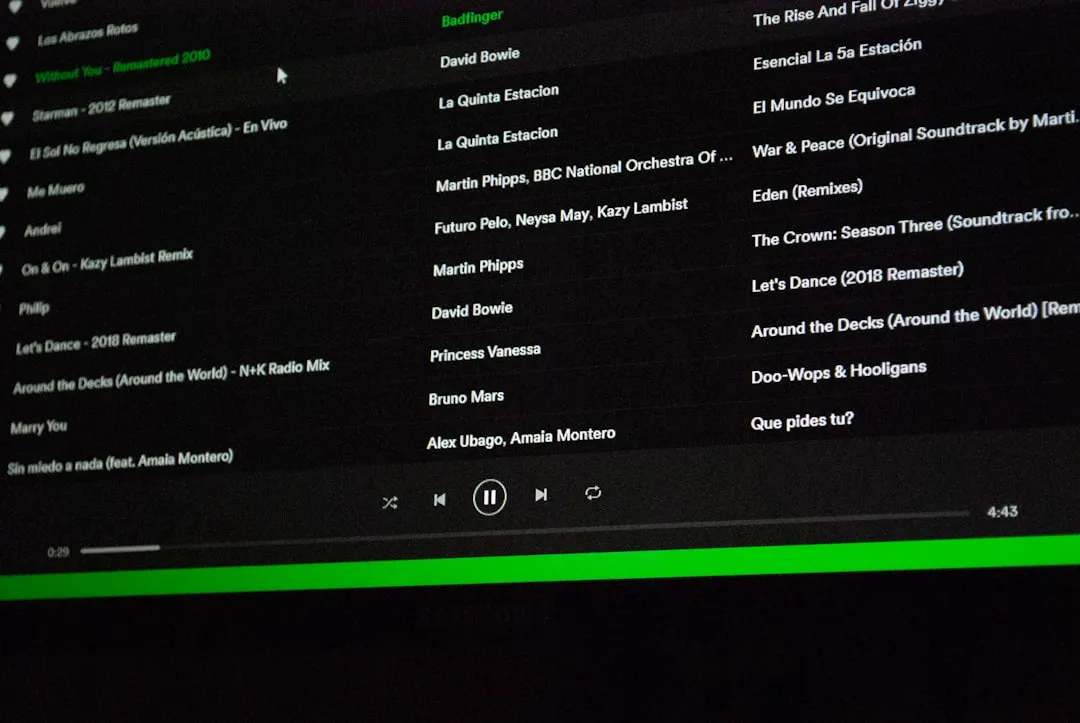
Spotify's annual Wrapped campaign has reached a cultural tipping point, and 2025's edition perfectly illustrates how streaming platforms are reshaping themselves from mere content distributors into social entertainment hubs. When Spotify drops its yearly data retrospective each December, millions of users eagerly transform into walking billboards for the platform, sharing colorful graphics that reveal their musical obsessions. But this year's launch introduces something genuinely different: Wrapped Party, the platform's first multiplayer feature that lets up to nine friends compare their listening habits in real-time.
This isn't just another incremental update to an already successful formula. Wrapped Party represents a fundamental shift in how year-end recaps function, moving from personal nostalgia into competitive entertainment. What started as a simple data visualization has evolved into something that looks more like a social gaming experience than traditional music analytics.
What makes Wrapped Party a game-changer?
The new multiplayer functionality transforms Wrapped from a solo reflection into an interactive tournament. Friends can now gather virtually to discover who discovered breakout tracks first, which genres dominate their collective taste, and where their musical preferences overlap, as detailed by WERSM. The platform assigns playful titles like "Most Obsessed Fan," "Early Bird," "Picky Listener," and "Dinner Table Explainer" based on group dynamics, creating instant conversation starters and friendly bragging rights.
What's particularly clever about this approach is how it addresses something users were already doing informally. People have been screenshot-swapping their individual Wrapped results for years, trying to compare stats and discover musical overlaps with friends. Spotify has essentially formalized this behavior and made it infinitely more engaging through real-time data mashups and competitive elements.
Each Wrapped Party session shuffles its data presentations, ensuring no two gatherings feel identical even with the same participants, according to WERSM. This design choice acknowledges that competitive music comparison isn't a one-time activity—it's an ongoing social ritual that deserves fresh content with each interaction. By solving the scalability problem of social comparison, Spotify creates multiple opportunities for user engagement beyond the traditional December spotlight.
Beyond the party: Wrapped 2025's competitive ecosystem
This year's Wrapped introduces several features that lean heavily into competitive elements and social ranking. The new Fan Leaderboard ranks users globally based on total minutes spent listening to their favorite artists, as reported by The Independent. For devoted listeners, achieving "Fan No. 1" status becomes a badge of ultimate dedication, according to Find Articles.
The platform also introduces Wrapped Clubs, which sort listeners into six distinct "listening styles" including Soft Hearts Club, Club Serotonin, Full Charge Crew, and Cosmic Stereo Club, as detailed by WERSM. Within each club, users receive roles like Leader, Scout, or Archivist based on their behavior patterns, creating multiple layers of identity and competition.
These classifications tap into something deeper than simple music analytics. They're creating micro-communities based on listening behavior, giving people new ways to identify with others who share similar musical consumption patterns. It's gamification meets social networking, wrapped in the familiar package of your annual music retrospective. This community-building approach transforms what was once individual data into collective identity formation.
PRO TIP: The inclusion of real play counts in Top Songs playlists according to WERSM addresses years of user requests for transparency, providing the exact metrics that make competitive comparisons more meaningful and precise.
How rivals are responding to the competitive shift
The streaming wars have evolved beyond catalog size and audio quality into experiential differentiation. Apple Music Replay takes a continuity approach, updating weekly throughout the year rather than creating a single annual event, according to Cord Cutters. This strategy offers convenience for users who want ongoing insights, but it lacks the cultural moment that makes Wrapped so shareable.
YouTube's Recap feature covers both music and broader viewing habits, assigning users personality types based on consumption patterns, as noted by Cord Cutters. This dual-platform approach positions YouTube to capture both music consumption and broader entertainment habits, though it hasn't achieved the same viral penetration as Spotify's focused music narrative.
The technical complexity behind enabling collaborative features across multiple accounts in real-time represents a significant engineering achievement, especially when processing data for over 678 million monthly active users, as reported by Cord Cutters. This infrastructure investment demonstrates how platforms must balance user experience ambitions with technical feasibility at massive scale.
What emerges is a clear strategic divergence: Apple emphasizes utility and ecosystem integration, YouTube focuses on comprehensive entertainment analytics, while Spotify doubles down on social competition and cultural relevance. These approaches serve different user needs, but Spotify's event-driven model creates shared cultural experiences that generate widespread social engagement and brand awareness, according to Cord Cutters.
The psychology behind competitive listening
Research shows that social motivations for music listening are especially significant in collectivist cultures, according to Cord Cutters. Wrapped Party addresses a practical user experience gap by allowing real-time comparison and gamification of different people's music consumption patterns simultaneously, as noted by Cord Cutters.
This shift acknowledges that music discovery and taste-making have always been inherently social activities—Spotify is simply formalizing and amplifying these natural behaviors. The competitive element taps into social comparison theory, where people naturally evaluate themselves relative to others. Music taste becomes a particularly rich domain for these comparisons because it feels both personal and culturally relevant.
When someone discovers they were the "Early Bird" who found a breakout track first, or that they're the "Most Obsessed Fan" in their friend group, it provides social validation for their listening habits while creating data-driven bragging rights. The platform's approach reflects broader trends in digital engagement, where passive consumption increasingly gives way to interactive experiences that strengthen social bonds through shared activities.
What this means for streaming's future
Platforms are moving beyond competing solely on music libraries, audio quality, or recommendation accuracy, as observed by Cord Cutters. The integration of competitive elements suggests that future streaming services will need to consider how their features facilitate social connection and friendly rivalry. Music recaps are evolving from simple data presentations into sophisticated tools for understanding our relationship with entertainment, culture, and each other, according to Cord Cutters.
Current innovations suggest streaming platforms are positioning themselves as comprehensive lifestyle analytics providers rather than simple entertainment distributors. The success of Wrapped Party will likely influence how competitors approach social integration, according to Cord Cutters. If multiplayer data comparison proves as engaging as early indicators suggest, we should expect similar features to appear across other platforms within the next development cycle.
The question isn't whether other platforms will follow Spotify's competitive model—it's how quickly they can develop the technical infrastructure and cultural understanding necessary to compete in what's becoming the new standard for user engagement. Platforms will continue investing in making these experiences more engaging, more social, and more integrated into users' ongoing relationship with their content consumption habits, according to Cord Cutters.
The bottom line is that Spotify Wrapped 2025 represents more than just an annual marketing campaign. It's a blueprint for how digital platforms must evolve to maintain user attention in an increasingly competitive landscape. By turning personal data into social entertainment, Spotify has created a template that extends far beyond music streaming—one that any platform with rich user data could potentially adapt for their own community-building efforts. The real innovation isn't just the multiplayer feature itself, but the recognition that future platform success depends on transforming individual consumption into collective experiences.






Comments
Be the first, drop a comment!