





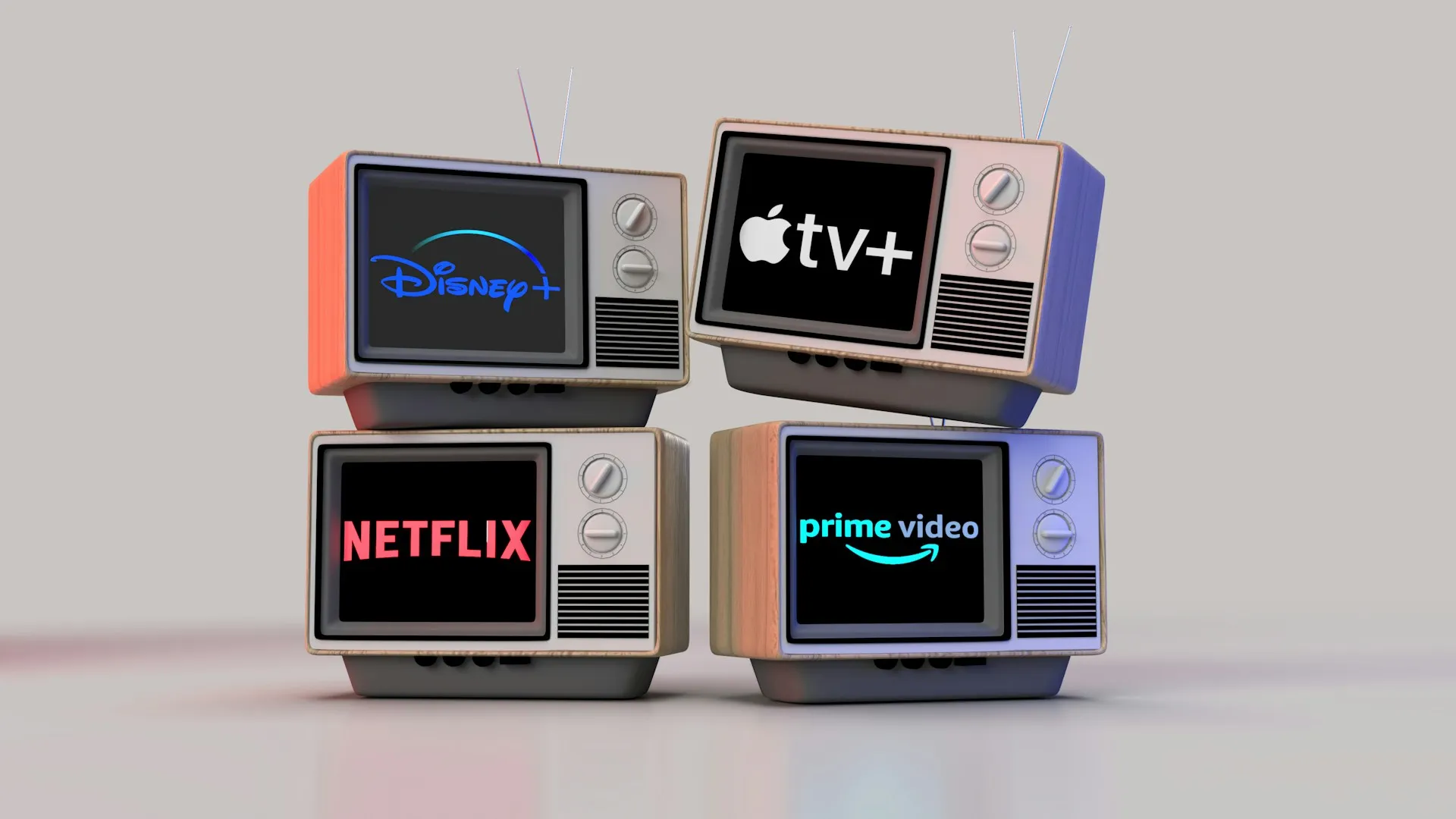
The streaming wars have reached a fascinating inflection point. While most of us have been juggling multiple subscriptions and watching our monthly entertainment bills creep upward, a surprising development is reshaping the landscape: bundling is making a comeback. The major streaming platforms have increased their prices by an average of 12% this year alone, according to the Los Angeles Times, with Netflix, HBO Max, Disney+, Apple TV+, and others all implementing significant rate hikes. These price increases are creating the perfect storm for bundling's resurgence, as consumers seek ways to maximize content variety while controlling costs.
Yet consumers are increasingly gravitating toward ad-supported tiers and bundled offerings that promise more content for less money. Research from Investopedia shows that Netflix's ad-supported viewing time jumped from 34% to 45% in just one year, while viewing on free, fully ad-supported services surged from 1.3 billion to 1.8 billion hours. The prospect of a Netflix and HBO Max bundle could represent the next logical step in this evolution, potentially offering consumers relief from "streamflation" while giving these platforms a competitive edge against emerging mega-bundles.
The economics behind streaming's price spiral
Let's break down what's really driving these relentless price increases across the streaming landscape. The entertainment industry is experiencing what analysts call "streamflation" – a phenomenon that goes far beyond typical inflation adjustments. The Los Angeles Times reports that HBO Max boosted its ad-free plan by $1.50 to $18.49 monthly, while Netflix increased its cheapest ad-free option by $2.50 to $17.99. These aren't small tweaks – they represent substantial revenue grabs as subscriber growth has plateaued following the pandemic boom.
What's driving this pricing confidence? Industry data shows that Warner Bros. Discovery's HBO Max parent company grew its global streaming subscribers by 22% to 125.7 million, yet CEO David Zaslav openly stated he believes the service remains underpriced with "real opportunity to raise prices." This pricing confidence reflects a mature market where platforms believe they've moved beyond commodity status to essential entertainment utilities.
The streaming giants are also investing heavily in premium content like Netflix's NFL games and MLB deals, plus HBO's blockbuster series like "House of the Dragon," driving up operational costs that inevitably get passed to consumers. These investments signal a strategic shift toward differentiating through exclusive, high-value content rather than competing purely on price.
Why the Disney-Warner bundle is changing everything
Here's what you need to know about the game-changing partnership that's already disrupting Netflix's dominance. The Disney+, Hulu, and Max bundle launched in July 2024 with pricing starting at $16.99 monthly for ad-supported content, and analytics firm Antenna found that 80% of subscribers remained active after three months – significantly outperforming Netflix's 74% retention rate over the same period. This marks the first time any bundled offering has demonstrated superior retention metrics compared to Netflix's standalone service.
This retention advantage stems directly from the bundle's content synergy strategy. Unlike Netflix's algorithmic approach to broad appeal, the bundle succeeds through intentional diversity. According to Parrot Analytics, the three platforms combined generate more than double the U.S. audience demand compared to Netflix, with minimal content overlap – just over 7% of titles are shared across the services. The bundle's success stems from its content diversity: subscribers can stream "The Bear" on Hulu, "Succession" on Max, and "The Mandalorian" on Disney+ within a single package, appealing to households with varied viewing preferences that Netflix struggles to satisfy with its increasingly homogenized content strategy.
What makes this particularly compelling is how it addresses the psychological shift in consumer behavior. Rather than Netflix's one-size-fits-all approach, the bundle acknowledges that different family members want different content experiences – all within a single, predictable monthly payment.
What a Netflix-HBO Max partnership could deliver
Imagine the streaming landscape if Netflix and HBO Max decided to join forces rather than compete. Such a collaboration would create an entertainment powerhouse combining Netflix's global reach and recommendation algorithms with HBO's premium content reputation and Warner Bros.' extensive film catalog. Current pricing shows Netflix's ad-supported plan costs $7.99 monthly while HBO Max's equivalent tier runs $9.99, meaning a combined offering could potentially start around $14-15 monthly – significantly undercutting their individual ad-free plans that cost $17.99 and $16.99 respectively.
The content synergy would be remarkable. Netflix's over 2,000 originals including "Stranger Things" and "Bridgerton" paired with HBO's acclaimed series like "Game of Thrones" and "House of the Dragon," plus Warner Bros.' theatrical releases and DC Universe content would create an unparalleled entertainment ecosystem. You'd get Netflix's algorithm-driven discovery paired with HBO's curatorial excellence – the best of both worlds.
However, such a partnership would require Netflix to abandon its go-it-alone strategy that has defined its brand, while HBO Max would risk diluting its premium positioning—making this more of a desperation play than a strength-building move. Research indicates that bundling helps reduce churn while enabling services to focus on customer relationships and data ownership, suggesting such a partnership could benefit both platforms' long-term sustainability while delivering unprecedented value to consumers seeking comprehensive entertainment options.
The broader rebundling revolution
The streaming industry is experiencing a fundamental shift that mirrors broader technology cycles of bundling and unbundling. Business analysis from Zuora reveals that nearly 30% of all new streaming subscriptions are now purchased through aggregators like Amazon, Apple, Roku, or YouTube, with Amazon Prime Video users alone signing up for 46 million streaming subscriptions through its "Channels" business. This represents a dramatic reversal from the cord-cutting era when consumers celebrated escaping cable bundles for à la carte streaming options.
These aggregators fall into distinct strategic categories: ecosystem players like Amazon and Apple leveraging existing customer relationships, platform specialists like Roku monetizing their interface control, and content hybrids like YouTube expanding beyond their core offering. The New York Times has declared that "the bundle is back," driven by consumer fatigue over managing multiple passwords, apps, and billing cycles.
Industry experts note this isn't just a trend but "a rhythm of commerce" – the same cycle that transformed cable television, with Amazon and Apple now playing the role once held by cable operators in stitching together fragmented services into cohesive entertainment packages. The pendulum has swung from innovation-focused unbundling to scale-focused rebundling, with platforms recognizing that bundled suites win when customers experience integration fatigue.
Looking ahead: the future of affordable streaming
The streaming wars are evolving from a battle over content volume to one focused on content synergy and value delivery. Market predictions from Deloitte suggest that streaming "stacking" will decline in 2025, with the average number of subscriptions peaking at about four per consumer in the United States before falling as bundled offerings gain traction. This decline in stacking reflects a fundamental shift in consumer psychology—from the initial excitement of choice to the practical reality of management fatigue.
The success of existing partnerships demonstrates this psychological evolution. Analysis shows that consumers using bundles are 15% more likely to maintain streaming subscriptions after six months, making them attractive to platforms seeking sustainable growth beyond the subscription acquisition phase. The Disney-Warner bundle's superior retention rates and Comcast's StreamSaver combining Peacock, Netflix, and Apple TV+ prove that consumers value convenience and comprehensive content access over individual platform loyalty.
A Netflix-HBO Max bundle could represent the ultimate streaming value proposition: combining the world's most popular platform with premium content excellence at a price point that undercuts individual subscriptions. As traditional pay-TV subscriptions are projected to fall below 21% of households by 2028, the streaming industry's future belongs to those who can deliver maximum content diversity and value through strategic partnerships rather than expensive standalone services.
The bottom line on streaming economics
The streaming industry stands at a crossroads where collaboration may prove more valuable than competition. While individual platforms continue raising prices and chasing exclusive content, the most successful offerings are those that prioritize consumer value through bundling strategies. Current market dynamics show that over 182 million Americans use streaming services, with that number projected to exceed 202 million by 2027, but the focus is shifting from subscriber acquisition to retention and revenue optimization.
The winners in streaming's next phase won't be those with the most content, but those who best solve the integration problem that cord-cutting created. A Netflix and HBO Max partnership would represent the logical evolution of this trend – combining global scale with premium quality at a price point that makes economic sense for budget-conscious households. The companies that recognize bundling as a strategic necessity rather than a defensive tactic will likely emerge as the winners in streaming's next phase.
For consumers tired of juggling multiple subscriptions and rising costs, the prospect of comprehensive entertainment packages at reasonable prices offers hope that streaming can finally deliver on its original promise: better content, easier access, and genuine value compared to traditional cable television. The era of standalone streaming dominance is ending, and the future belongs to those smart enough to bundle their way to victory.





Comments
Be the first, drop a comment!